
Overview
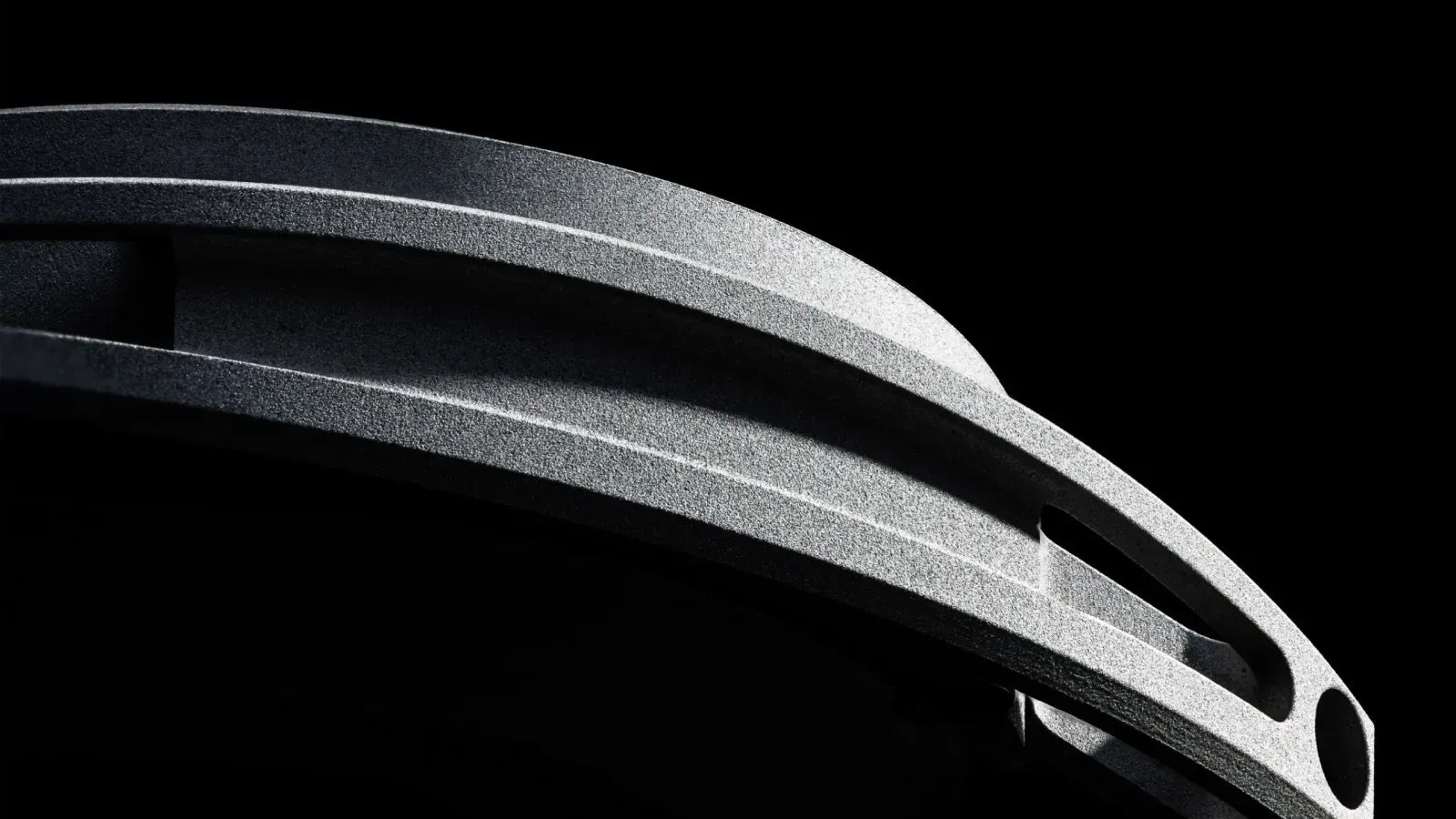
The Barrelhand Monolith is a mechanical tool watch engineered for EVA and IVA use, meaning astronauts working outside a vehicle and inside one. The case is 3D-printed from Scalmalloy, an aerospace aluminium-magnesium-scandium alloy, and the whole watch weighs 31 grams. It costs $9,750 and current orders ship from Q4 2026.
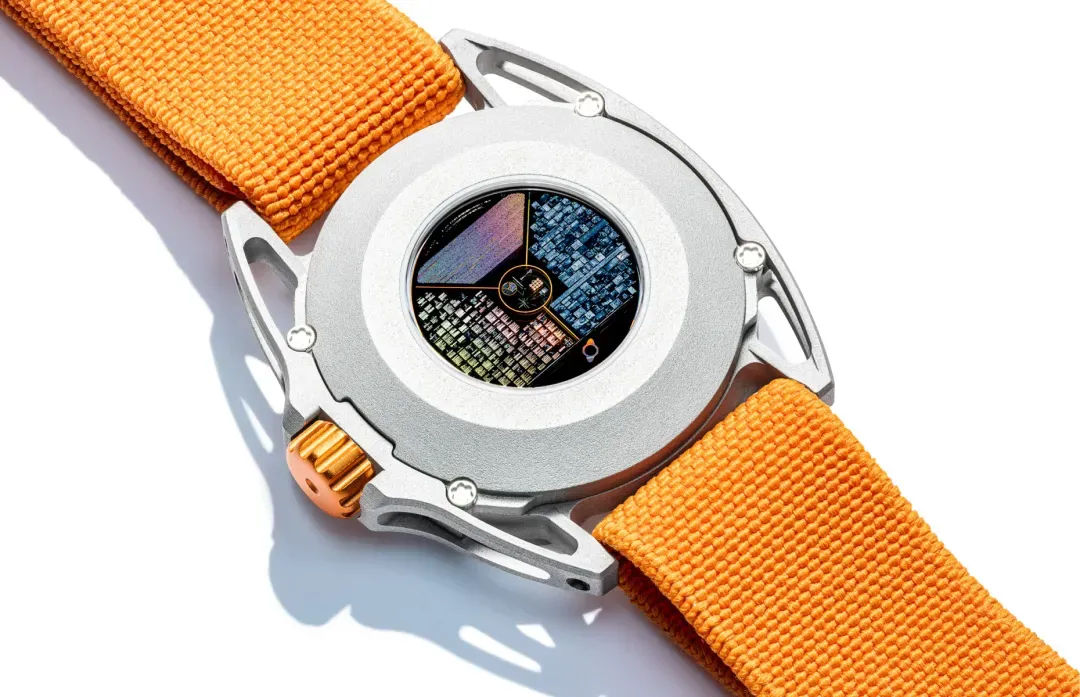
Three things make it more than a themed watch. The Airlock Crown winds and sets in vacuum or underwater without screwing down, which no normal diver's crown will do. The case prints with hollow Aircore chambers that insulate ten times better than solid steel, so the movement survives a stated -120 to +120 degrees C. And the caseback carries a NanoFiche Memory Disc holding about 3 GB of human culture on a 19 mm wafer, rated for a thousand years.

Detailed specifications
| Case | 38 x 45 x 11.8 mm, 20 mm lug width |
| Weight | 31 g complete, 6.5 g for the bare chassis |
| Case material | 3D-printed Scalmalloy, Type II anodised |
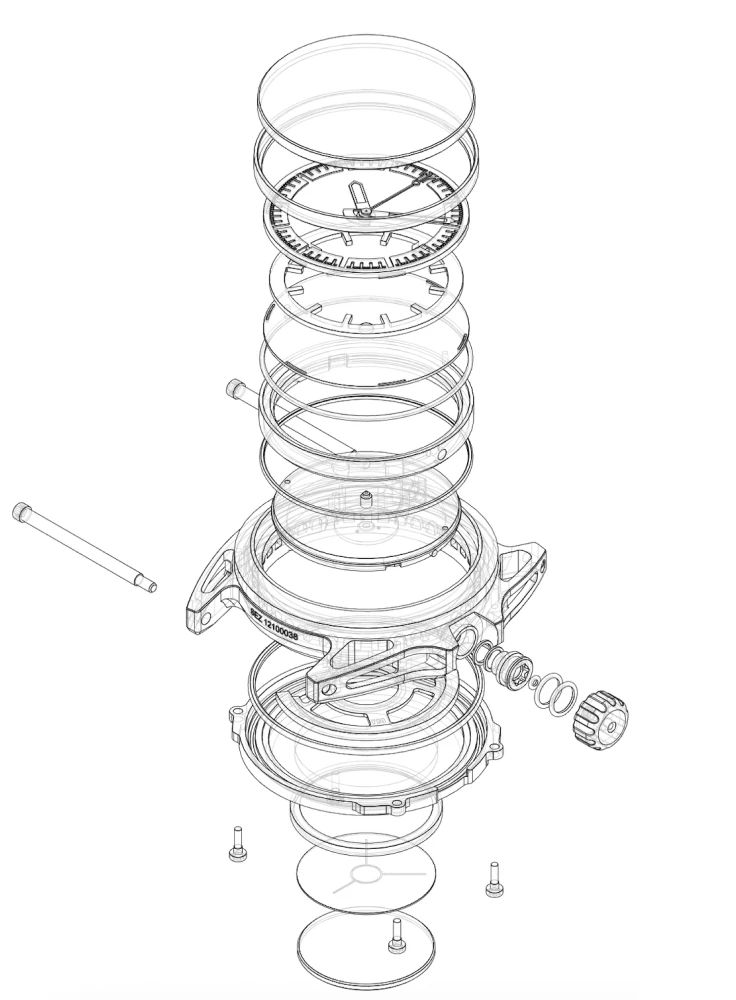
| Crystal | C-plane sapphire, magnesium fluoride AR, Hytrel L-ring suspension |
| Dial | Aerolight X2 monolithic ceramic, laser-welded, matte black |
| Crown | 8 mm Airlock, International Orange, operable in vacuum |
| Movement | Sellita SW300-1b, reworked as the Barrelhand M1 Engine |
| Frequency | 28,800 vph (4 Hz), bidirectional automatic |
| Power reserve | 50 hours |
| Accuracy | +/- 6 seconds per day at the factory, Chronofiable tested |
| Antimagnetic | ISO 764 / DIN 8309 certified, nickel-phosphorous escapement |
| Pressure | 0 ATM (vacuum) to 20 ATM (200 m) |
| Temperature | -120 to +120 degrees C in vacuum |
| Shock | 3,000 g on all axes |
| Caseback | Machined 7075 aluminium, A4 steel Torx screws, ISS-spec gaskets |
| Strap | Polyester elastic webbing, grade 5 titanium G-hook, three colours |
| Price | $9,750 USD |
Sources differ slightly on whether the 31 g figure includes the strap, so treat it as approximate. Either way it is roughly a third of a steel dive watch.
Background and context
Barrelhand is a small engineering outfit, not a heritage house. Its first watch, Project 1, appeared around 2020 and gave the brand its name: the mainspring barrel doubled as a hand. The company has worked at the junction of watchmaking and 3D printing from the start, and the Monolith is its second major watch after roughly six years of development.
The material choice is the interesting part. Scalmalloy was patented by APWORKS, an Airbus subsidiary, specifically for additive manufacturing. It carries close to titanium's strength at roughly half the weight, and printing it lets Barrelhand hollow out chambers no machinist could cut. That is the whole argument for printing a watch case rather than milling one: not cost, not speed, but internal geometry.
The crystal answers a real argument. NASA specified Hesalite acrylic on the Apollo Speedmaster because sapphire shatters into sharp fragments, which is a serious problem in a sealed capsule. Acrylic scratches instead. Barrelhand's answer is C-plane sapphire, cut on a crystal orientation it claims is twice as strong as standard sapphire, mounted in a Hytrel elastomer suspension ring that doubles impact resistance again. Scratch resistance of sapphire, shatter behaviour closer to acrylic.
The fasteners are the detail that suggests someone thought properly about the job. Caseback and strap-bar screws are standard-size Torx, chosen so they match tools already stocked aboard the ISS. That is not marketing; that is somebody reading a manifest.
The Memory Disc is the flourish. Made with Stamper Technology, it holds 286 translations of the UNESCO constitution preamble, the full text of Le Petit Prince, a set of artworks, a Voyager Golden Record tribute with reading instructions, and a waveform contributed by Richard D. James. The dial is by Les Cadraniers de Genève, the Geneva dial house owned by F.P. Journe and linked here through its parent because it keeps no site of its own, with lume work involving Swiss Super-LumiNova and Black Badger, the case is printed with Materialise and APWORKS, and the strap comes from Nick Mankey Designs.
On the "first watch designed for space" claim. It needs qualifying. The Speedmaster was a racing chronograph that NASA qualified for flight rather than a watch designed for the job, and several watches since have been built with space use in mind. Barrelhand's narrower claim, a tool watch engineered from scratch against EVA and IVA requirements for the commercial spaceflight era, holds up better than the headline version.
Pros and cons
Pros
- 31 grams. Ariel Adams, who wore it for aBlogtoWatch, says you can barely feel it on the wrist.
- The Airlock Crown genuinely is new. Winding and setting underwater or in vacuum, with no screw-down, is a real piece of engineering. Adams reckons it justifies the project on its own.
- Sensible size. 38 x 11.8 mm with a 45 mm lug-to-lug reads medium, even small. No fake toughness through bulk.
- The dial rewards a second look. Solid multi-layer lume blocks rather than paint, plus a lume ring around the periphery, on matte black ceramic with polished hands for contrast.
- Serviceable by design. A Sellita base means parts and watchmakers stay available, which is more than you can say for most boutique engineering exercises.
Cons
- Nothing on it says what it is. The dial is fully sterile and the only brand mark is a tiny logo on the caseback disc. Adams makes the fair point that the watch is not "Googleable" if you find one and do not already know.
- The Memory Disc is unreadable to its owner. You can see the grid with the naked eye and nothing more without laboratory optics.
- The strap divides opinion. Well made and light, but woven fabric frays, and it takes more fiddling to fit than a normal strap.
- The movement holder is not novel. Suspending the movement for shock resistance is established practice, whatever the surrounding language suggests.
- $9,750 is a lot for a time-only Sellita, however good the case around it.
Who it is for
Someone who buys engineering rather than provenance. The Monolith has no heritage, no auction record and no story older than 2020. What it has is a set of design decisions you can follow and check, which is a different kind of pleasure from a 1960s reissue.
At 38 mm with a sterile matte black dial, a big crown and a webbing strap, it sits closer to field-watch DNA than to a diver or a pilot chronograph. It suits a small to medium wrist and a wardrobe that already tolerates a nylon strap. Good with anything technical; wrong with a suit.
Buying considerations
Buy direct from Barrelhand. Deposits are fully refundable before shipment, and the next batch delivers from Q4 2026. It is not a limited edition, but production runs in small batches through the year, so availability comes in waves rather than continuously.
Three colourways: Barrelhand Orange, black, or black with an orange stripe. The 20 mm lug width means any strap you already own fits, which matters given the reservations about the supplied one.
The movement is the reassuring part of the ownership case. A Sellita SW300-1b is an ETA 2892 architecture with a supply chain any competent watchmaker can serve, so the watch should not become unserviceable when the company's attention moves on.
Verdict
The interesting question is not whether this watch will go to space. It is whether the engineering stands up when you strip the mission narrative away, and mostly it does. The Airlock Crown, the printed insulation chambers and the suspended C-plane sapphire each solve a stated problem in a way you can verify. The Memory Disc does not, and is the one part that is pure romance.
For me the price puts it outside what I would actually buy. What it does earn is attention: it is the first watch in a while where the specification sheet reads like it was written by someone solving a problem rather than someone selling one. Worth watching what this brand does over the next five years.
Further reading
The most useful independent piece is Ariel Adams's hands-on review, which is where most of the criticism above comes from.


- Barrelhand Monolith product page
- aBlogtoWatch on the sapphire versus Hesalite problem
- SJX Watches: The Barrelhand Monolith Takes Flight
- APWORKS, the Airbus subsidiary behind Scalmalloy