
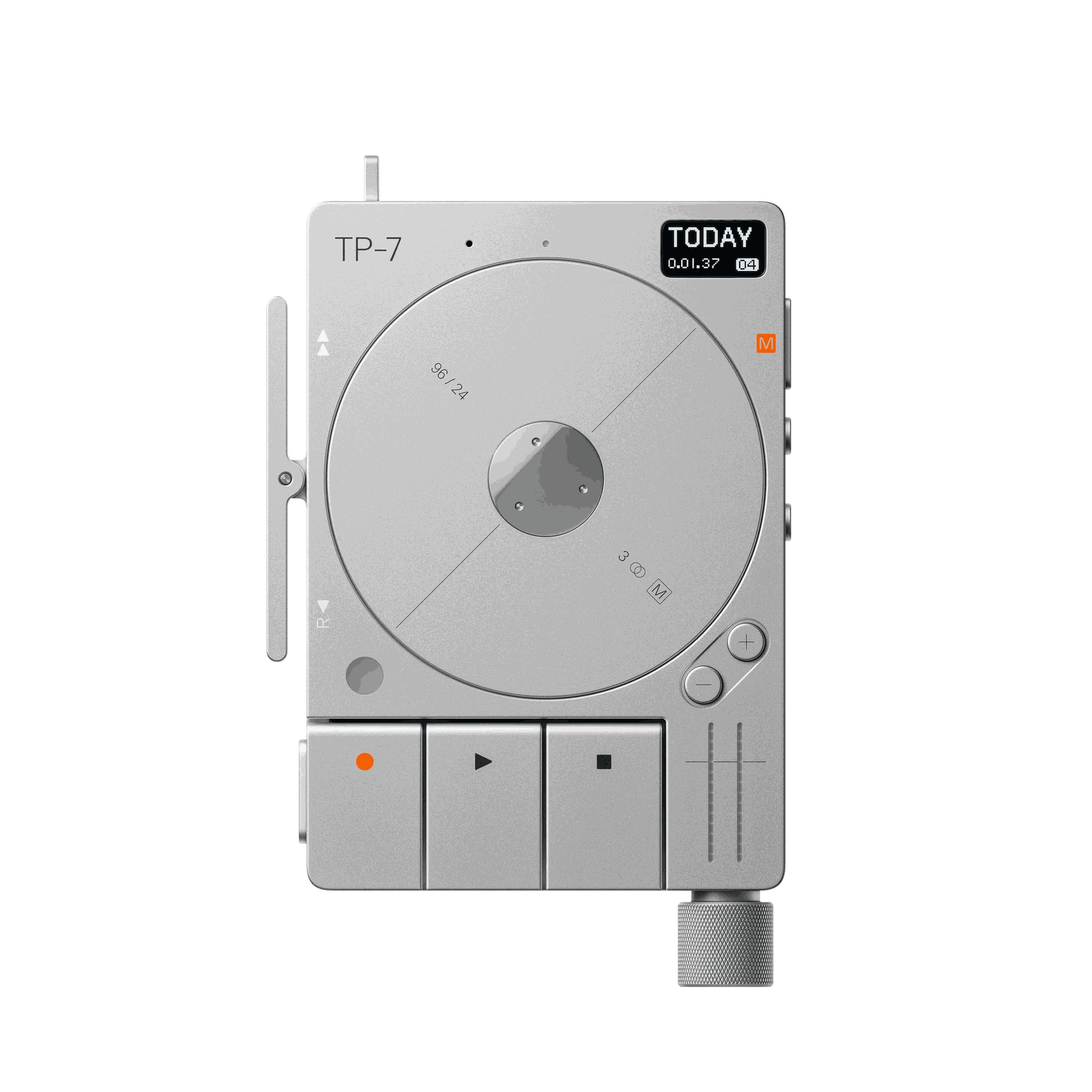
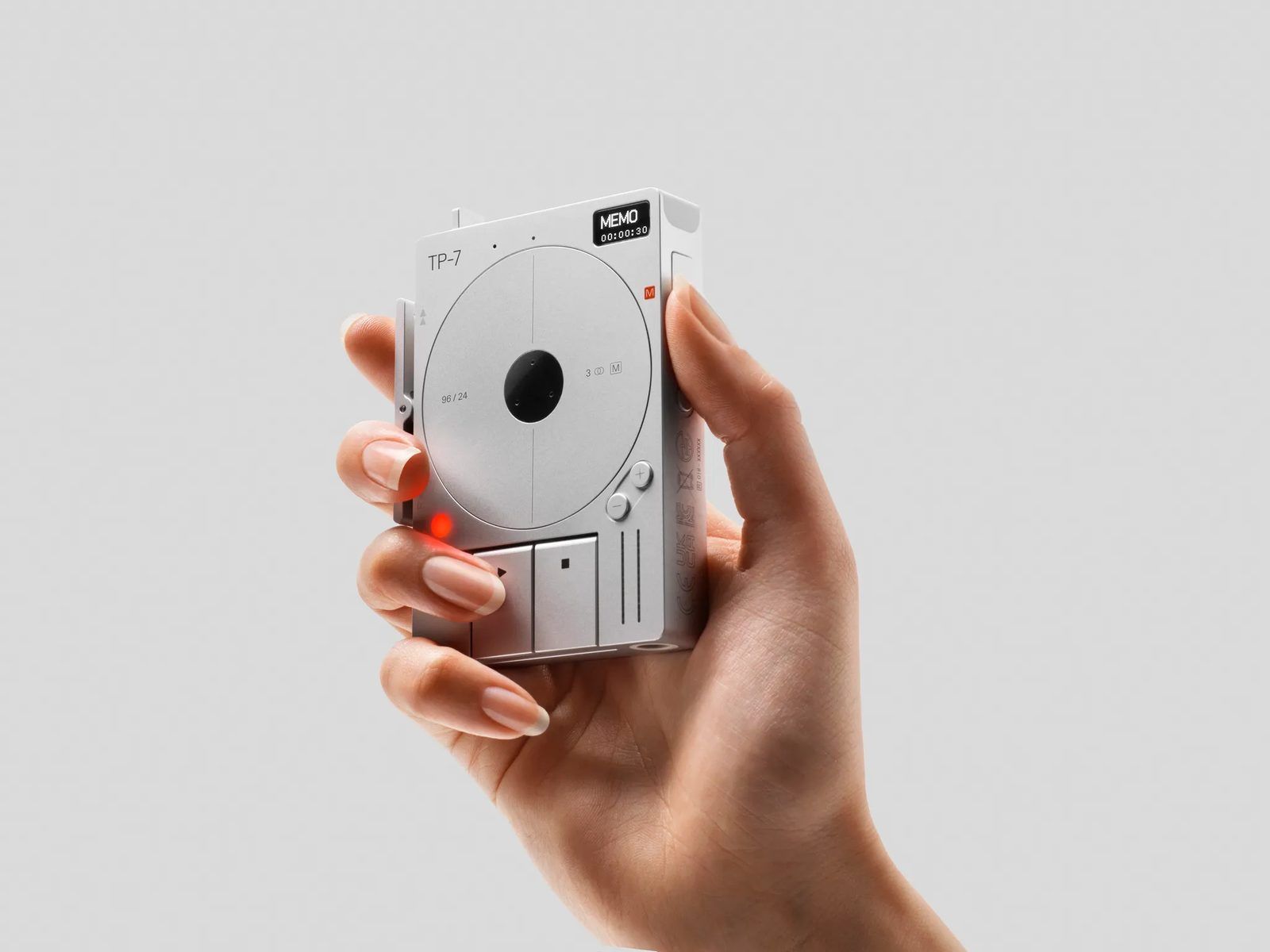
The TP-7 is a digital field recorder from Teenage Engineering, the Stockholm design company behind the OP-1. It looks like a tiny tape recorder and works like one: a motorised reel turns while it records, and you grab it to pause, scrub or scratch. Inside it is a full multitrack recorder and editor, a USB audio interface and the hub of Teenage Engineering's portable field system. It costs about 10 times a basic Zoom recorder, and that is the whole debate.
Overview
- What it is: a pocket recorder for voice memos, interviews, podcasts, field recording and music sketches, with editing on the device.
- What stands out: the motorised reel, a memo button that starts recording even when the device is off, and 3 jacks that each work as input, output or headset.
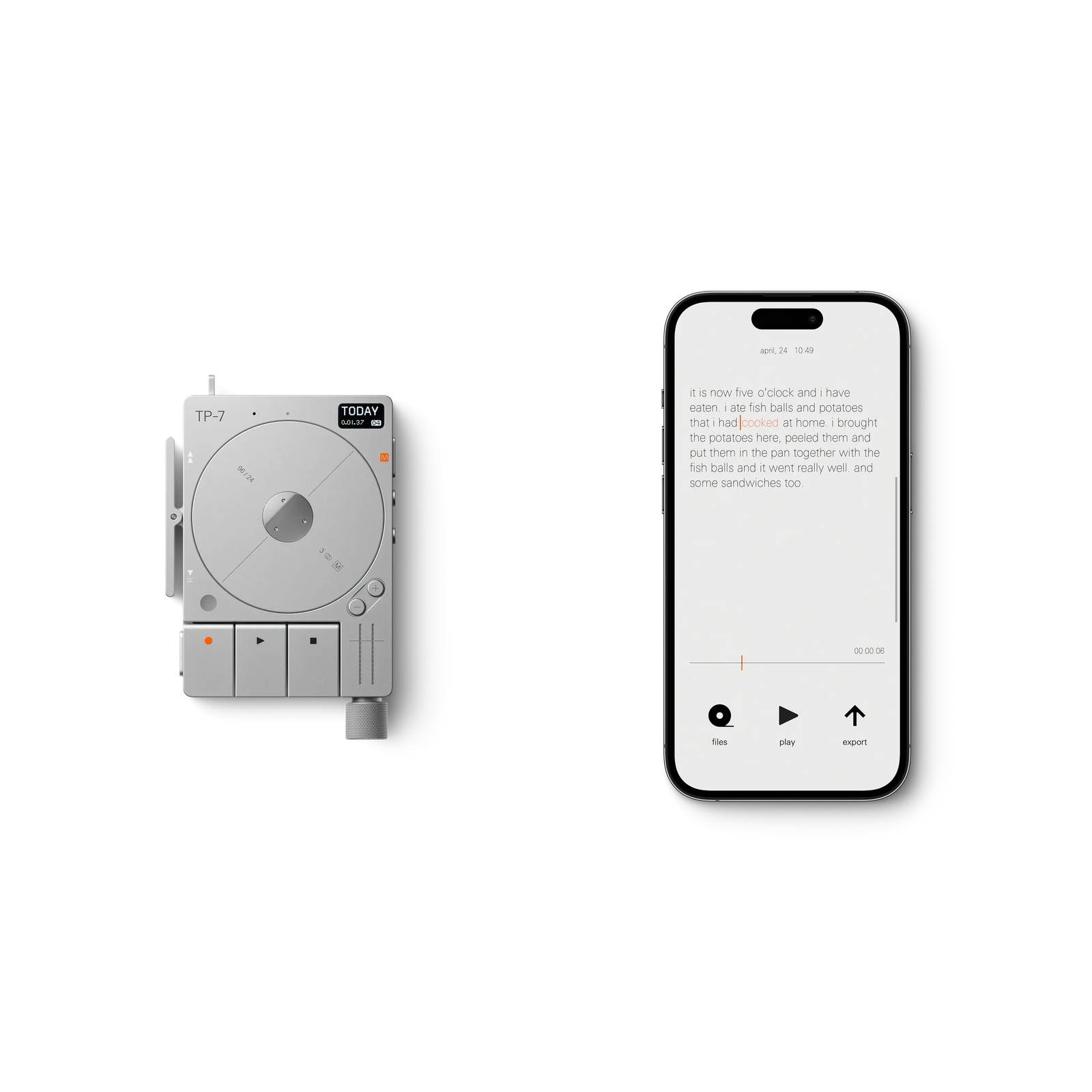
- Transcription: the free TP-7 app turns recordings into text in most languages.
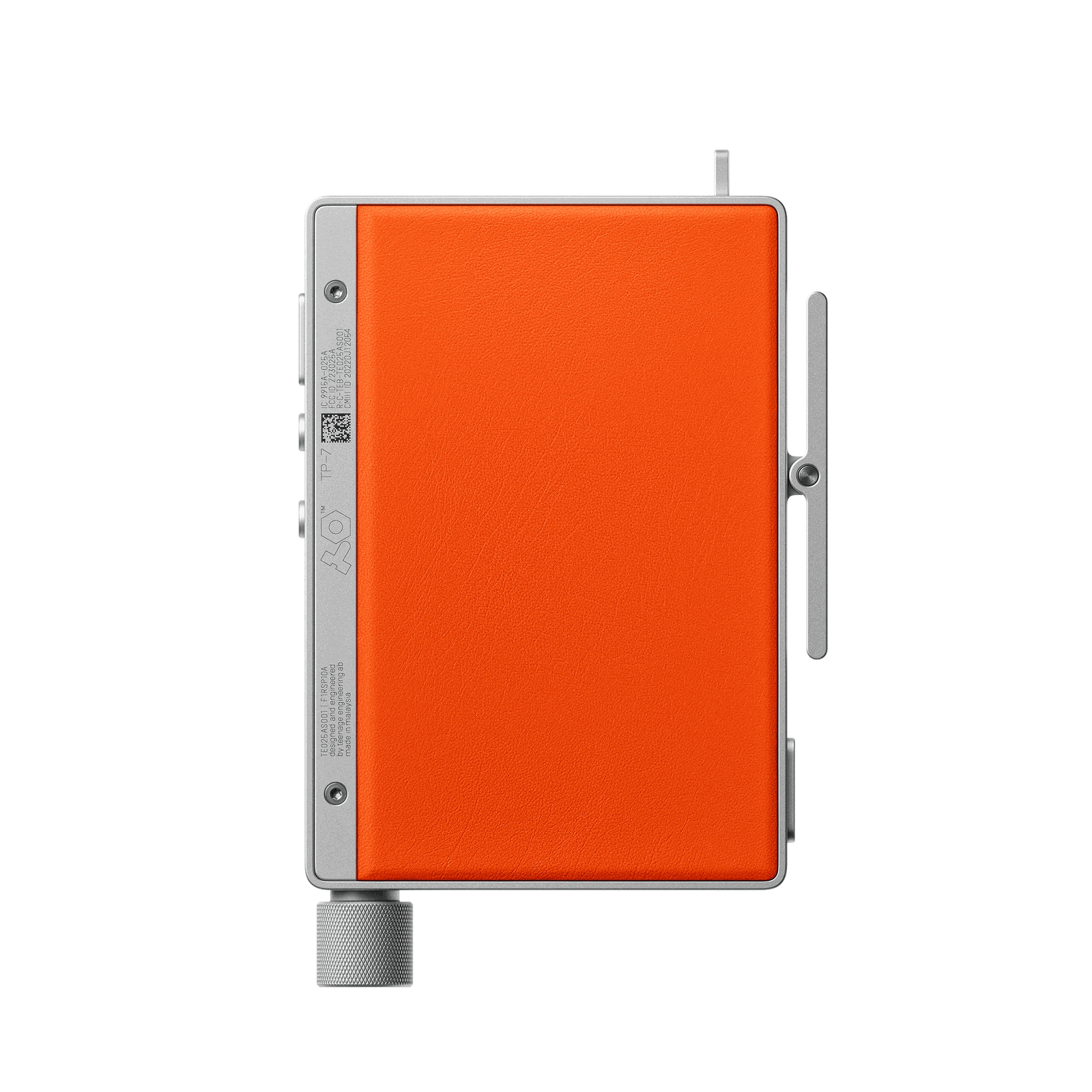
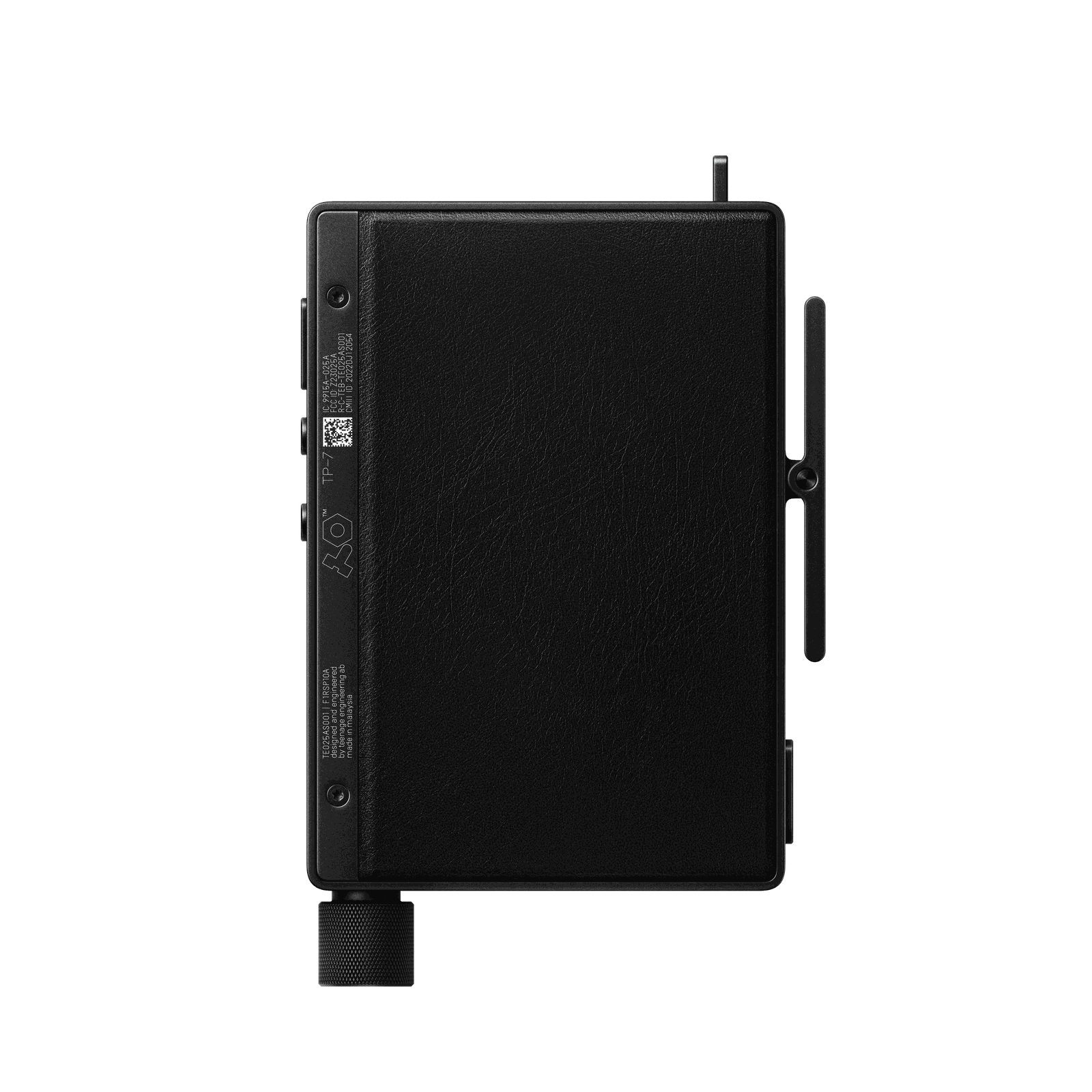
- Price: €1,499 in Teenage Engineering's store, in aluminium or black, on 24th October 2026. In the box: user guide, 6.35 mm adapter, textile USB-C cable and a reusable storage box.
Specifications
| Size and weight | 96 x 68 x 16 mm, 170 g |
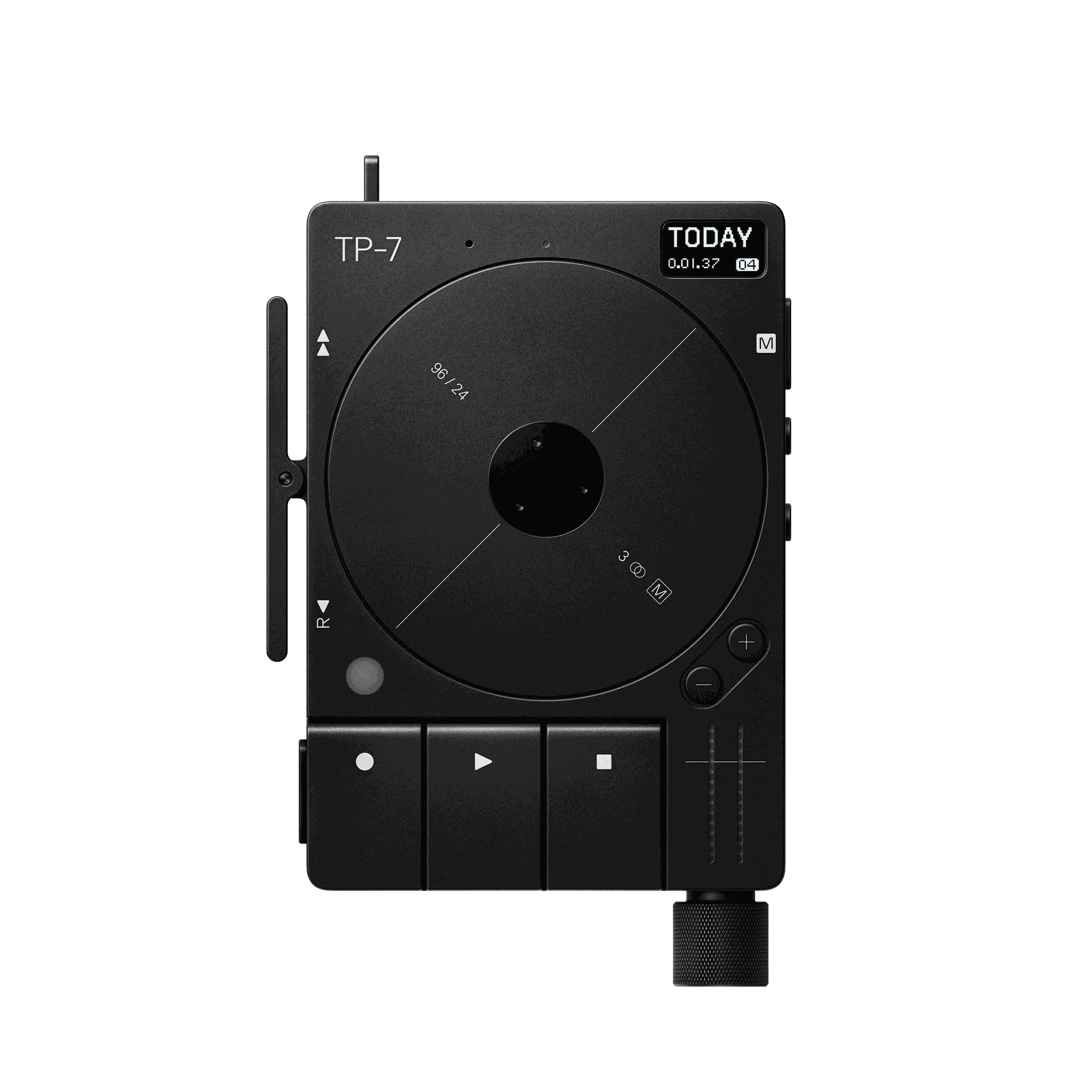
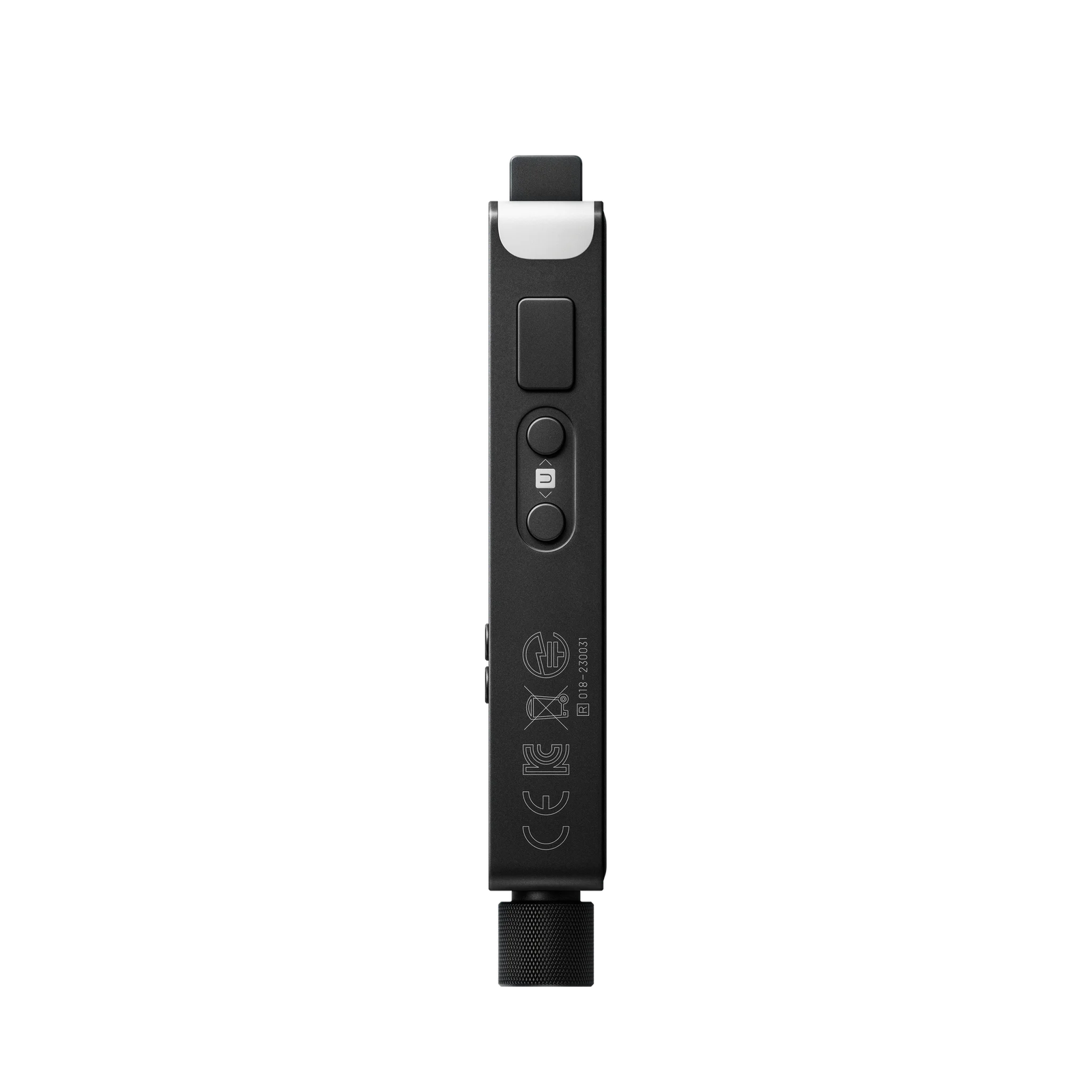
| Finishes | Aluminium, black |
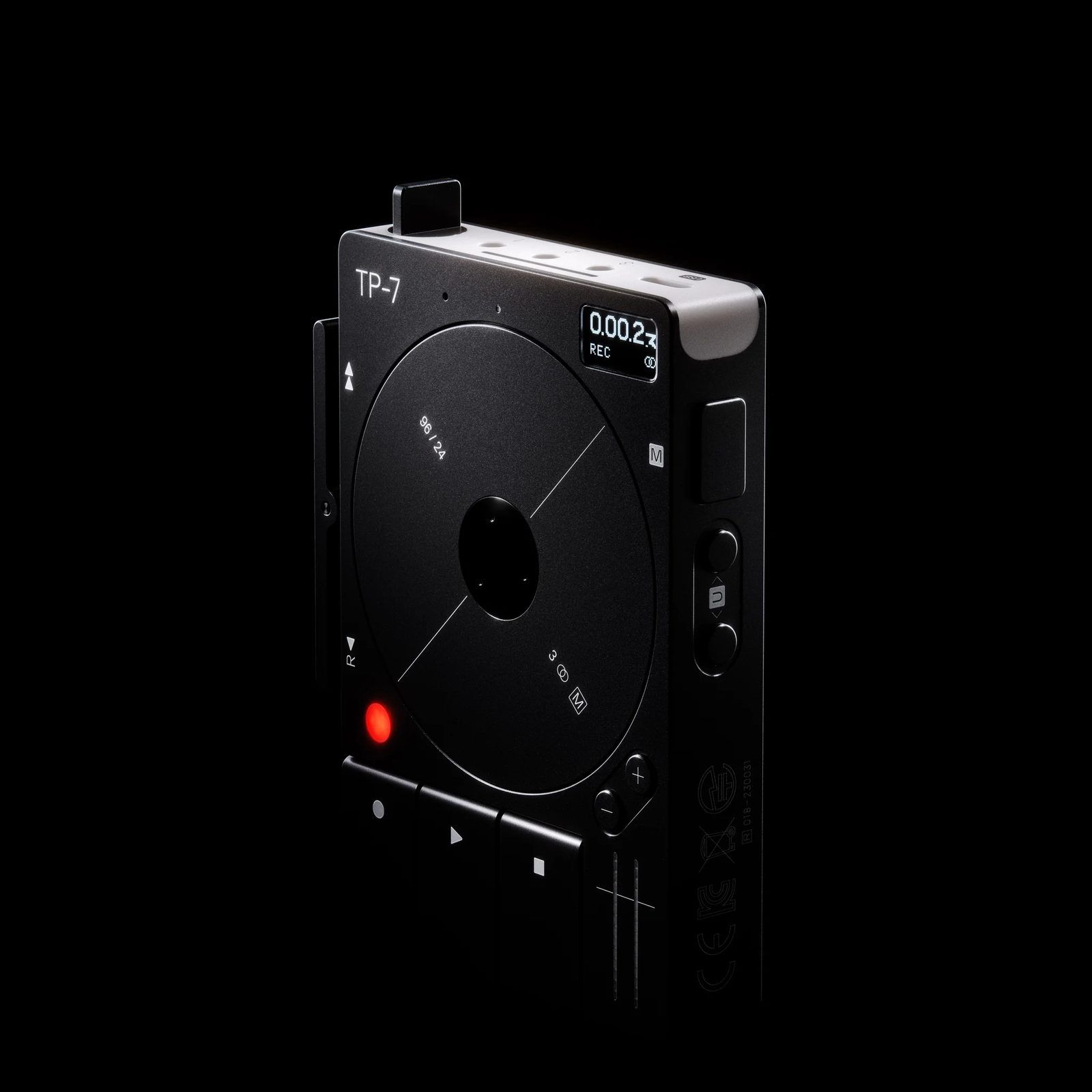
| Inputs and outputs | 3 two-way 3.5 mm stereo jacks (TRRS): input, output or headset |
| Main out | 6.35 mm stereo headphone jack, plus a 3.5 mm adapter |
| Built in | Microphone and speaker |
| Storage | 128 GB, not expandable |
| USB-C | 24-bit/96 kHz multichannel audio interface, MIDI, file transfer, charging |
| Wireless | Bluetooth Low Energy |
| Battery | Rechargeable, 7 hours |
| Display | 64 x 32 pixel monochrome |
| Input | 9.5 kOhm, gain 0 to 42 dB, max 8 dBu, 105 dBA signal-to-noise |
| Headphone out | Max 8 dBu, 120 dBA signal-to-noise |
| Built-in mic | 98 dBA signal-to-noise |
Teenage Engineering's sum: 128 GB keeps 5 minutes of ideas a day for 20 years.
The design, up close
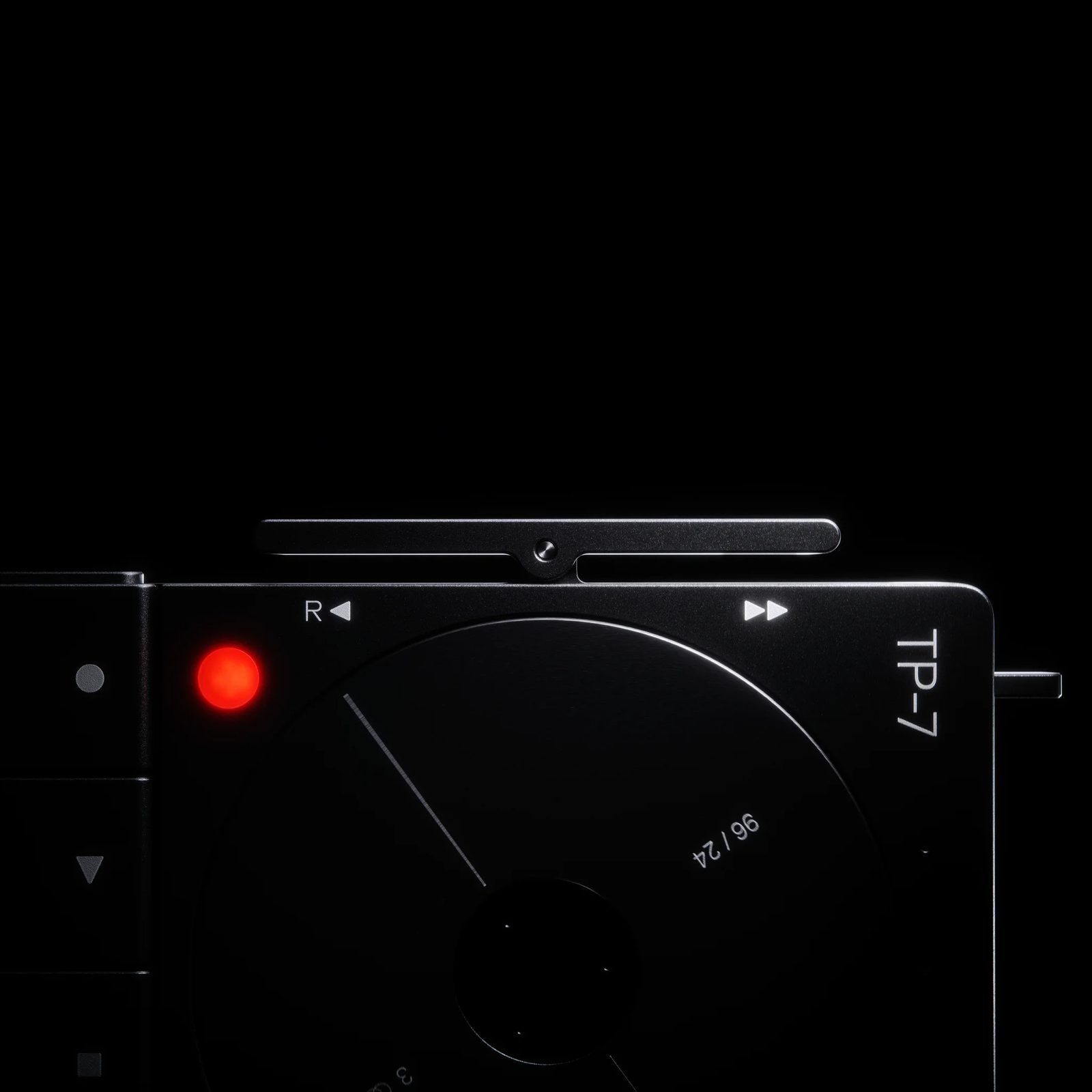
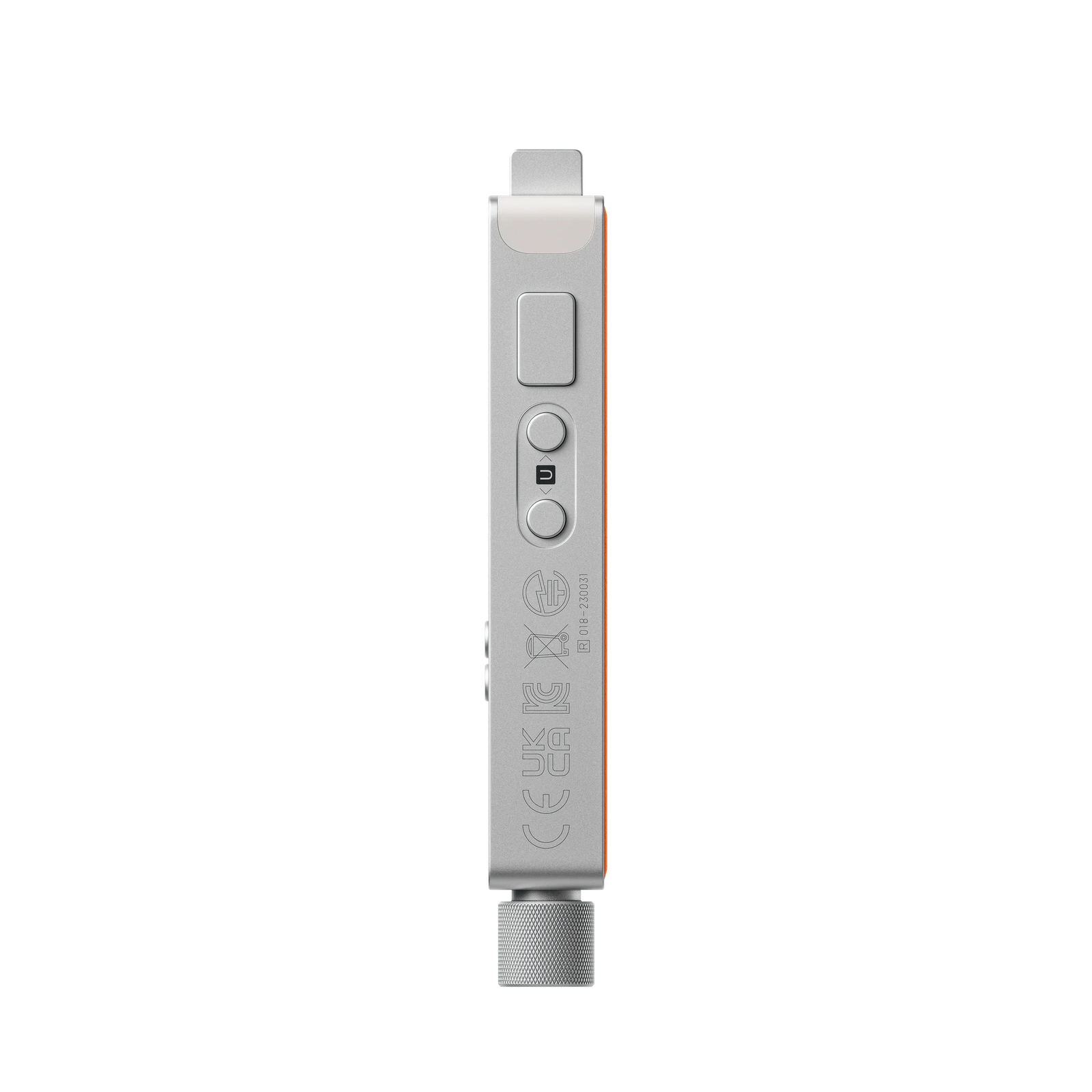
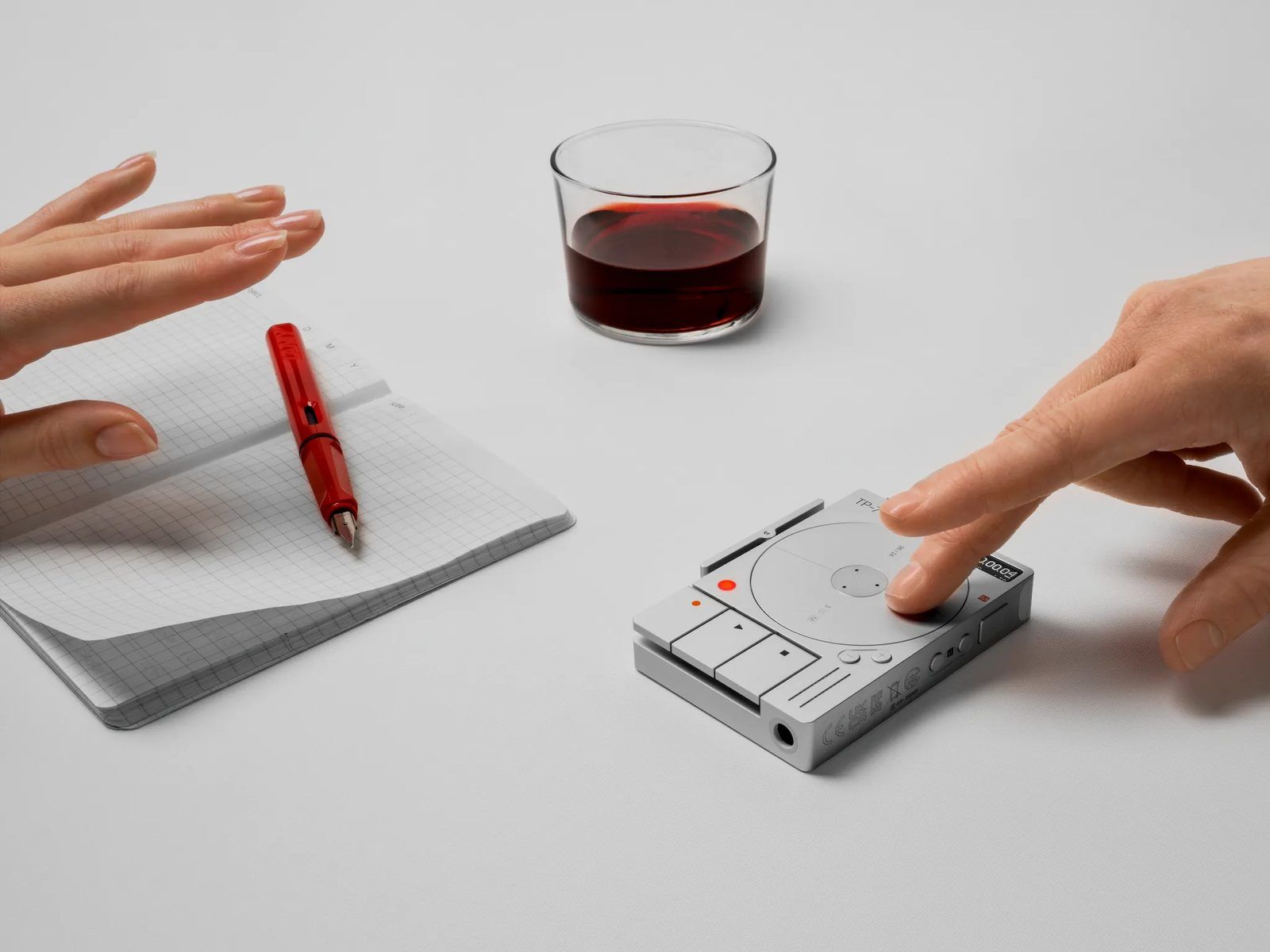
- The reel: a brushless motor with very fine resolution. It spins as visual feedback, and it is the control: touch it to pause, turn it to scrub or scratch, use it to move through menus. In an interview, a finger on the reel stops the recording "off the record".
- The memo button: 1 press turns the TP-7 on and starts a new recording. No unlocking a phone, no app to find.
- The rocker: on the side. Press the top edge to fast-forward, the bottom to rewind, and the reel spins at "hyperspeed".
- The red lamp: lit while recording, so the person across the table knows.
What it's for
Teenage Engineering lists 6 uses, and the hardware supports each:
- Voice memos: the memo button, then transcription in the app.
- Interviews: small, quiet, with the red lamp and the reel as a visible "recording" signal.
- Podcasts: up to 6 external mics on the 3 stereo jacks, or the internal mic, with a VU meter for levels.
- Field recording: internal mic, 3 stereo inputs, 7 hours of battery.
- Editing: multitrack, overdubs, re-takes of a snippet, cue markers, loops, bounce, metronome and count-in.
- Live: record every instrument in a small studio or a live set, or use 2 TP-7s as turntables with the TX-6 mixer.
The field system
The TP-7 is the recorder in Teenage Engineering's field system, a set of portable, battery-powered products that connect to each other. With the field system, the TP-7 records every source at once:
- CM-15 field microphone, $1,199.
- TX-6 field mixer, $1,199.
- OP-1 field and OP-XY synthesisers, plugged straight into a jack.
The rest of the brand, from the OP-1 to the pocket operators, is in Teenage Engineering.
What reviewers say
Pros:
- The interface: the reel, the memo button and the rocker make recording physical and fast. Gizmodo called it "the Ferrari of digital tape recorders".
- Connectivity: 3 assignable stereo jacks, multichannel USB audio, Bluetooth. Far more than a pocket recorder usually has.
- Multitrack in the pocket: overdub, re-take and arrange without a computer.
- Design and build: small, solid aluminium, and a joy to use.
Cons:
- Price: €1,499 against about €150 for a basic Zoom recorder. Most reviews come back to this.
- Storage: 128 GB, no card slot.
- File transfer: Gizmodo found getting files off the device clunky.
- Field use: Wired noted poor wind handling on the internal mic, and MusicRadar points to more rugged dedicated field recorders.
- Small screen: 64 x 32 pixels for a multitrack editor.
Review videos
Gizmodo: the short review
Gizmodo's verdict in 3 minutes, from the reviewer who called it the "Ferrari of digital tape recorders".
B&H: the overview
The most-watched walkthrough of the hardware and features, 9 minutes.
Andertons: making music with it
The TP-7 as a music tool: multitrack, overdubs and sketching songs, 16 minutes.
Nick Hook: firmware 1.3 in depth
A 27-minute deep dive into the later firmware and what it added.
Who it's for
- Yes: people who capture ideas all day and value speed and feel over price: musicians, writers, podcasters, designers, and anyone already in the Teenage Engineering system.
- No: anyone who only needs clean voice recordings. A Sony or Zoom voice recorder at a tenth of the price does that job, see Voice Recorders.
Buying
- Teenage Engineering: TP-7 aluminium or TP-7 black, both €1,499.
- Music retailers such as Thomann have listed it below the list price. Compare before you buy.
- Firmware: keep it current with the update utility. Teenage Engineering adds features through updates.
Verdict
The TP-7 is the most delightful recorder on the market and one of the least rational purchases. The reel and the memo button genuinely change how often you record, and the multitrack features and 3 assignable jacks make it far more than a dictaphone. If capturing ideas is part of your work, and €1,499 doesn't hurt, it earns its place. If you just need recordings, buy a Zoom or a Sony and keep €1,300.
Further Reading

- Gizmodo's review of the TP-7 and CM-15
- TP-7 downloads and firmware, teenage engineering
- The field system, teenage engineering