

Harness Pro is a small square touchscreen that sits on the desk and shows what your coding agents are doing. It plugs into a Mac by USB-C and talks to the Harness app, which reaches the agents on every computer you link: laptop, desktop, home server, cloud box.
Each agent gets the whole screen, with an animated pet that acts out its state. Swipe to the next agent. Tap one, speak, tap again, and the task goes to that agent. When an agent finishes or asks a question, the screen pings you.
It comes from Autonomous, the maker of the SmartDesk standing desks. Autonomous launched it on 16th October 2026, the same day the Harness app was #2 on Product Hunt.
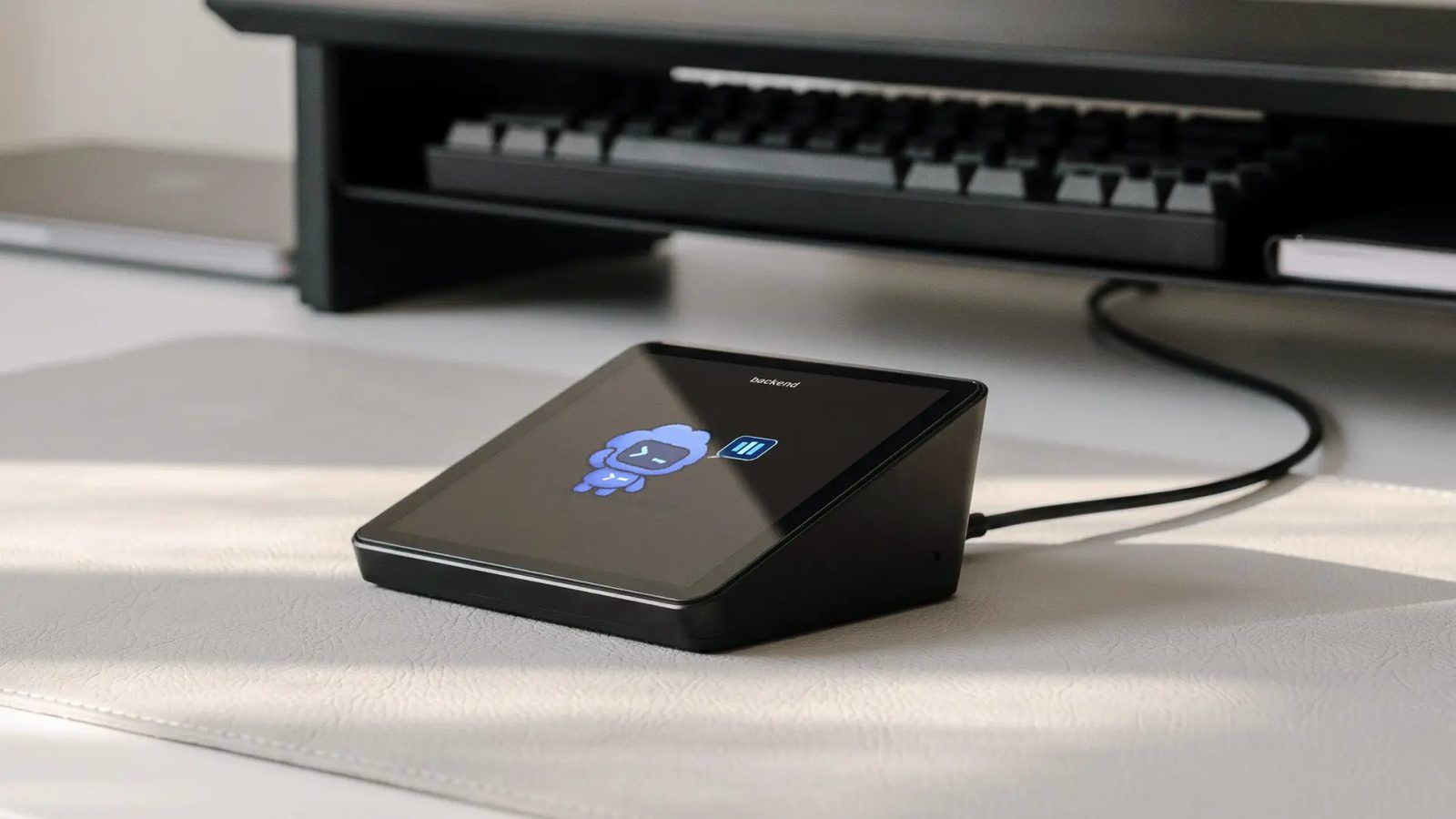
Key facts
| Maker | Autonomous (autonomous.ai) |
| Price | $299 in the US store, €314.16 in the German store |
| Shipping | Pre-order. Free shipping, delivery from 30th November 2026 |
| Colours | Dark Mode (black) and white with a silver aluminium body |
| Needs | The free Harness app on a Mac or Linux computer, and a Harness account |
| Agents | Claude Code, Codex, Cursor, OpenCode, Pi, Devin, Copilot and 7 more |
| Software | Harness app, CLI, daemon, relay and device firmware, all MIT-licensed |
| Sibling | The round Harness device, $149, open hardware down to the PCB and case |
Detailed specifications
The page marks the size and the tilt as preliminary.
| Spec | Harness Pro |
|---|---|
| Display | 3.95" square, 720 × 720, 60 Hz, capacitive touch, cover glass |
| Housing | CNC-machined aluminium, face tilted about 20° towards you |
| Size | 86.0 × 80.7 × 34.6 mm |
| Processor | ESP32-P4, 16 MB flash, 32 MB PSRAM |
| Microphones | 3: front left, front right, rear |
| Speaker | Notification tone, can be muted |
| Button | Tap to go back or stop, hold to turn the screen off |
| Voice | Cloud speech-to-text, language set in the Harness app |
| Connection | USB-C to the computer that runs Harness. No Wi-Fi, no battery |
| Updates | Automatic, over the cable |
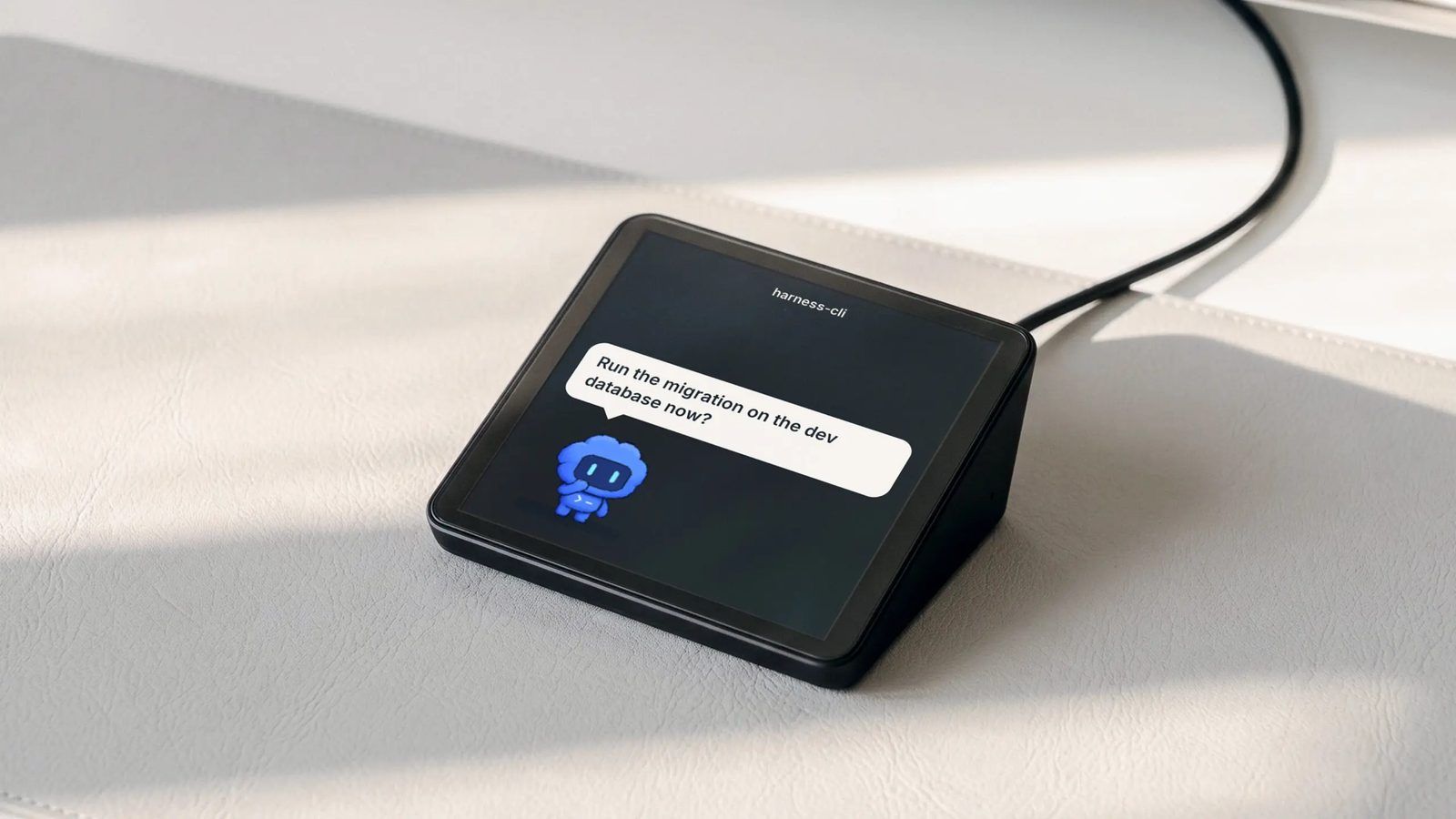
Background: the Harness app
The device is a remote control. The product is the Harness app, free and open source since August 2026. It puts every agent session, on every machine, in 1 window:
- 14 coding agents, side by side. Harness runs each agent's own CLI and never wraps it. It reads the transcripts and uses each vendor's hooks.
- Every machine in 1 window. Link a machine with a password. No SSH keys, no Tailscale, no open ports.
- A Git worktree per session, so parallel agents don't clash.
- Agents keep going when you close the app or the laptop lid, as long as the host machine stays awake.
- Clients everywhere: a native desktop app (Flutter, not Electron),
hnin the terminal with tmux keys, and iOS and Android apps. - 49 domain-specific harnesses in a Store. Each one turns a coding agent into a specialist with a live viewer: Blender, KiCad, FreeCAD, MuJoCo, Typst, Marp, Home Assistant, Ollama and more.
How it compares
| Tool | Form | Difference with Harness Pro |
|---|---|---|
| Harness device | Round screen, $149 | Same job, smaller round screen, open PCB and case |
| Harness mobile app | iOS and Android, free | Same swipe, tap and speak, on the phone you own |
| T3 Code - 1 app to run Claude Code, Codex and other coding agents | App for desktop, web and phone | Software only, with diffs and a PR button |
| Herdr | Terminal multiplexer | Terminal only, 1 machine, no voice |
Pros and cons
Pros:
- Glanceable. Which agent works, which is done and which waits on you, without a window switch.
- Voice to the right agent. Tap the agent, say the task. No typing, no picking the terminal.
- Every machine. Agents on a home server or a cloud box show up next to the local ones.
- Open stack. App, daemon, relay and Pro firmware are on GitHub under MIT.
- Solid build. Aluminium, a tilted face, 1 cable for data and power.
Cons:
- $299 for a second screen that the free phone app mostly replaces.
- Not open hardware, yet. The repo has the Pro firmware, but no PCB or enclosure files, unlike the round device.
- Cloud speech-to-text. Your spoken tasks leave the machine, and the page doesn't name the provider.
- Young. The repo started on 4th August 2026 and ships several releases a day. The specs are still "preliminary".
- No reviews yet. It launched today and ships in about 6 weeks.
Who it's for
- A developer who runs 3 or more agent sessions at once, ideally across more than 1 machine.
- Someone who wants agent status out of the main screen, like a status light for a build server.
- Not for someone with 1 agent in 1 terminal. The free app, or no tool, does that job.
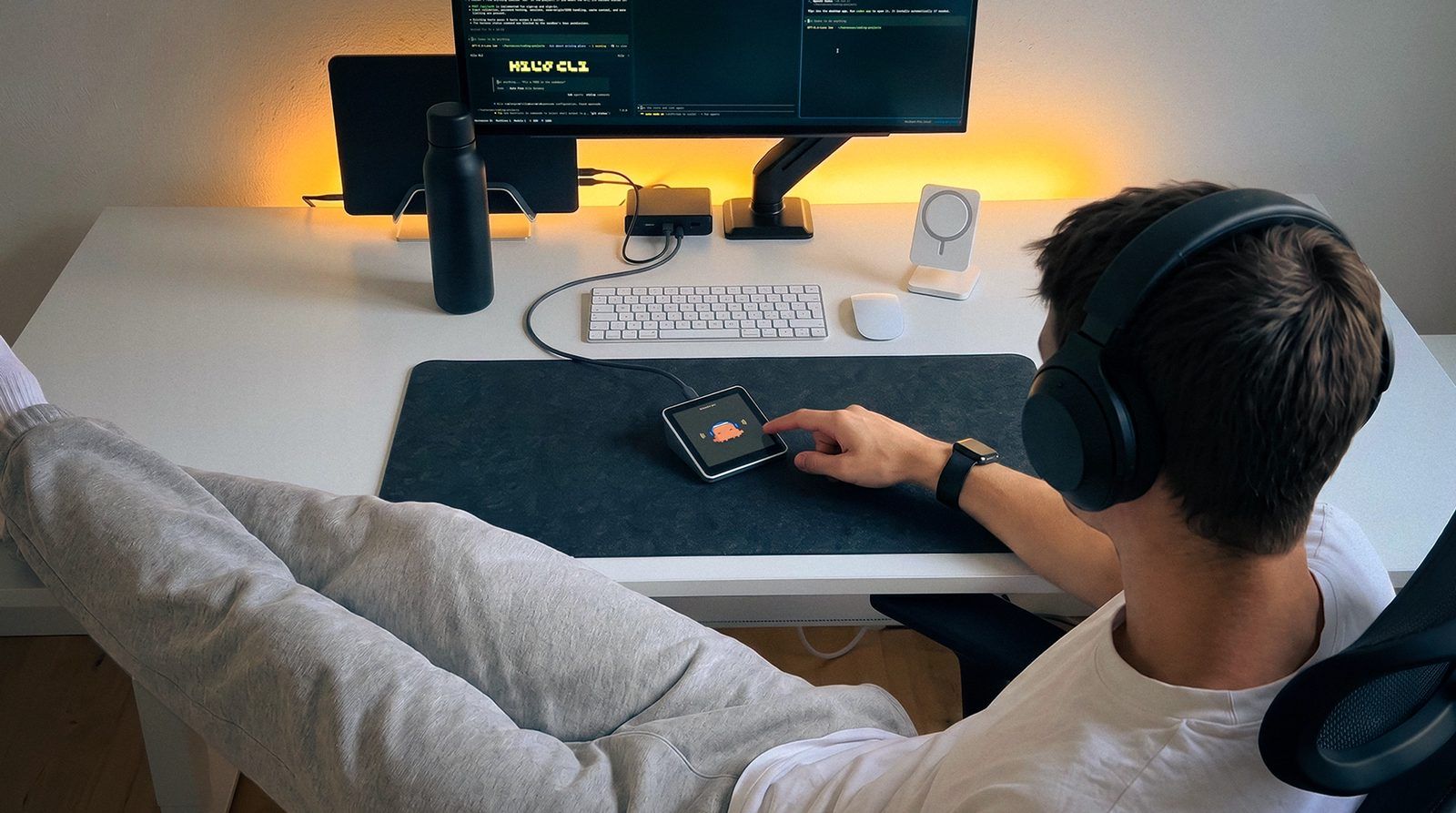
For business people
- What it solves: developers now run several AI agents at once, on several computers. Tracking which one is stuck, finished or waiting for approval eats attention. Harness Pro puts that status on a dedicated screen and takes the next instruction by voice.
- Cost: $299 per device. The Harness software is free. Agent subscriptions (Claude, ChatGPT, Cursor) bill as before.
- Where it fits: a power user's desk, not a team rollout. Each device serves 1 person and 1 host computer.
- Risks:
- Voice goes to a cloud speech service. Check that before you dictate anything confidential.
- It needs a Harness account. The terminal traffic is end-to-end encrypted, but account and connection metadata still exist.
- It's pre-order hardware. Autonomous is known for desks and chairs, and Harness is a few months old. Features may change before it ships.
For technical people
Architecture
Each machine runs 1 daemon. The daemon runs the agents in tmux and dials out, so no machine opens a port. The desktop app talks to the local daemon over loopback. Harness Pro talks to the same daemon over USB with a cable protocol, documented in the repo.
Machines connect in this order:
- A direct WebRTC channel, peer to peer.
- Cloudflare TURN, when a firewall blocks the direct path.
- The Harness WebSocket relay, while WebRTC negotiates.
All 3 paths carry the same end-to-end encryption: ChaCha20-Poly1305, X25519 session keys and pinned Ed25519 identities. The relay forwards ciphertext and holds no keys. Remote terminals stream text, not pixels.
Install
Sign in to your agent CLIs first. Harness uses your own accounts and keys.
# Desktop app: download from harness.autonomous.ai/desktop (macOS 12+, Ubuntu 22.04+)

# Add a remote machine, then Machines > Link Machine in the app
curl -fsSL https://harness.autonomous.ai/cli/install.sh | bash
harness login
harness remote-password set
harness start

# Terminal client with tmux keys
hn
Claude Code can start, wait for and read other sessions through the Harness plugin:
claude plugin marketplace add autonomous-ai/openharness --sparse .claude-plugin plugins
claude plugin install harness@openharness
Gotchas
- The host must stay awake. A sleeping machine can't run its agents. After a reboot, the daemon restores the sessions when Harness starts again.
- Approval by voice. The round device's spec sheet says spoken tasks run with auto-allow, no approval taps. The Pro page doesn't say. Check each agent's permission mode before you hand it a voice remote.
- Firmware flashing is risky. The Pro has a power latch: a wrong-revision image bricks the board. Use the repo's
flash.sh, which checks the chip revision first, or leave updates to the daemon. - Wi-Fi is off on purpose. The board's ESP32-C5 radio is held in reset. The Pro only works on the cable, next to a computer that runs Harness.
- Linux support is official for Ubuntu 22.04+. Other distributions get the AppImage and no promise.
My take
The Harness app is the interesting part. 1 window for every Claude Code session on every machine, with a worktree per session and no SSH setup, is the problem I solve today with Herdr in the terminal. Harness adds the other machines and a phone app, and it's free. That's the part I'd test first.
The Pro itself is a nice object at a steep price. $299 buys a status light and a microphone for software I can already use on my phone. The round $149 device does the same job, and it's open hardware down to the PCB.
What would make me buy it:
- An approval flow I trust: see the agent's question, answer yes or no with a tap, and never auto-allow by voice.
- Local speech-to-text. My voice shouldn't need a cloud round trip to reach an agent 30 cm away.
- 2 or 3 months of stable releases after it ships.
Until then, the free app and the phone are enough.
Further reading

- Harness Pro on the German store, priced in euros
- Harness device, the round $149 model
- Harness Pro firmware, build, flash and the cable protocol
- T3 Code - 1 app to run Claude Code, Codex and other coding agents, a software-only control plane for coding agents
- Pi Coding Harness, one of the agents Harness runs