
10 days in Japan next year, landing in Tokyo, with the family. The route is built around 3 things: the best sushi we can find, shokunin, the craftspeople who spend a lifetime perfecting one thing, and electronics. Everything else is optional. For how Tokyo grew into the world's largest city, see Tokyo: How the World's Biggest City Got That Way.
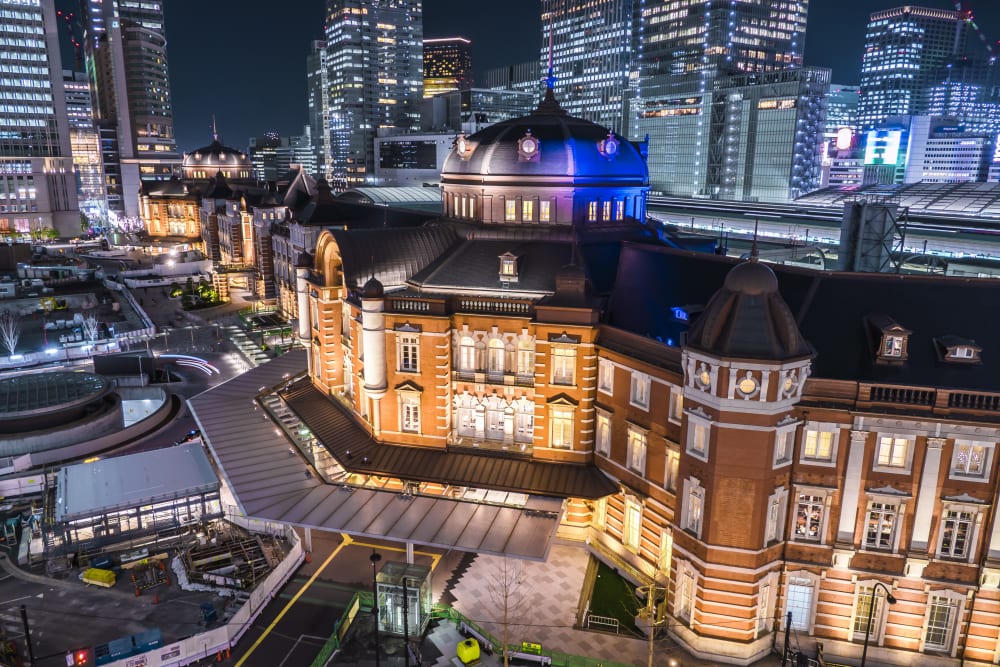
The route
A loop: Tokyo, Kanazawa, Kyoto, and back to Tokyo for the last night, so the flight home isn't a race against a train. The nonstop flight from Munich lands at Haneda in the early morning, so day 1 is a full day, and jet lag makes a 5am start at the fish market on day 2 easy.
| Day | Base | Plan |
|---|---|---|
| 1 | Tokyo | Land early. Asakusa and Senso-ji, then Kappabashi kitchen street next door |
| 2 | Tokyo | Toyosu tuna auction at dawn, sushi breakfast at Tsukiji outer market, Akihabara |
| 3 | Tokyo | Japan Folk Crafts Museum, Shibuya and Harajuku, omakase dinner |
| 4 | Kanazawa | Shinkansen, 2.5 hours. Higashi Chaya district, gold leaf workshop |
| 5 | Kanazawa | Omicho market sushi lunch, Kenroku-en garden, craft shops |
| 6 | Kyoto | Under 2 hours, changing at Tsuruga. Afternoon temples |
| 7 | Kyoto | Temples at opening time, Nishiki market, knives at Aritsugu |
| 8 | Kyoto | Nara for a half-day, or an evening of food in Osaka |
| 9 | Tokyo | Shinkansen, 2 hours 15 minutes. Last shopping |
| 10 | Home | Haneda |
That's 9 nights: 3 in Tokyo, 2 in Kanazawa, 3 in Kyoto, 1 back in Tokyo.
Why Kanazawa earns 2 of only 9 nights. It's the one stop that serves all 3 interests at once: Japan's gold leaf capital, a city of working craftspeople, and a Sea of Japan fish market. It's also the one town from the "less obvious" thread below that fits a 10-day route.
When to go
Bavarian school holidays set the window. Here is what each one looks like in Japan:
| 2027 holiday | Dates | Japan at that time |
|---|---|---|
| Easter | 22 March to 2 April | Cherry blossom. Tokyo peaks around 31 March on average. Peak crowds and prices |
| Whitsun | 18 to 28 May | Warm and green, after Golden Week, before the rainy season |
| Summer | 2 August to 13 September | Hot and humid, Obon crowds mid-August, typhoon season |
Easter if cherry blossom is the point. Tokyo's average full bloom falls inside the holiday, and Kyoto follows a few days later, so the Tokyo-first route moves west with the bloom. Book flights and hotels early. Whitsun if comfort matters more: the weather is good and the crowds are thinner. Avoid summer.
Getting around: skip the rail pass
For this loop, single tickets beat the Japan Rail Pass. Adult one-way fares with a reserved seat:
| Leg | Train | Time | Fare |
|---|---|---|---|
| Tokyo to Kanazawa | Hokuriku Shinkansen | About 2 hours 30 minutes | ¥14,380 |
| Kanazawa to Kyoto | Shinkansen to Tsuruga, then Thunderbird | Under 2 hours | ¥11,660 |
| Kyoto to Tokyo | Tokaido Shinkansen, Nozomi | About 2 hours 15 minutes | ¥14,170 |
| Total | ¥40,210 |
The 7-day pass costs ¥53,000 from 1 October 2026, and it doesn't stretch across a 10-day trip anyway. Teenagers pay adult fares on both: JR child fares stop at age 11.
In the cities, a Suica in Apple Wallet covers trains, buses and convenience stores.
Sushi for the family
Sushi in Japan runs from ¥120 a plate to ¥47,000 a person. The best plan uses several tiers, not only the top one:
| Tier | Where | Per person |
|---|---|---|
| Conveyor belt | Sushiro, Kura Sushi | About ¥120 to ¥150 a plate |
| Market breakfast | Tsukiji outer market in Tokyo, Omicho market in Kanazawa | Casual, varies by stall |
| Counter lunch | Mid-range omakase, such as Sushi Tokyo Ten | About ¥3,500 to ¥7,000 |
| Counter dinner, top end | For example Sushi Shin by Miyakawa | ¥36,300 to ¥47,300 |
Official pages: Sushiro, Kura Sushi, Tsukiji outer market, Omicho market, Sushi Tokyo Ten, Sushi Shin by Miyakawa.
The value move is omakase at lunch. The same counters often charge half their dinner price for a shorter midday course. Save one dinner for the top end.
Teenagers at the counter. High-end counters often seat only guests aged 12 or 13 and older, and expect them to eat the full adult course, with no children's menu. Teenagers generally clear the bar, but check the age policy on each booking page. Book through TableCheck, Pocket Concierge or the hotel concierge, and give the children's ages when the form asks.
The Toyosu tuna auction is the dawn experience. The upper viewing gallery is free and needs no booking, open from 5am on market days. The lower deck, right above the floor, goes by a monthly online lottery, and every person in the group needs photo ID. Then walk to Tsukiji outer market for sushi breakfast.
Kanazawa sits on the Sea of Japan, and Omicho market is where the city buys its fish. Eat at the market's counters at lunch.
At the counter:
- Eat nigiri in one bite.
- Dip the fish side into the soy sauce, never the rice.
- Skip perfume at a high-end counter. The chef works with smell.
- No tipping, anywhere in Japan.
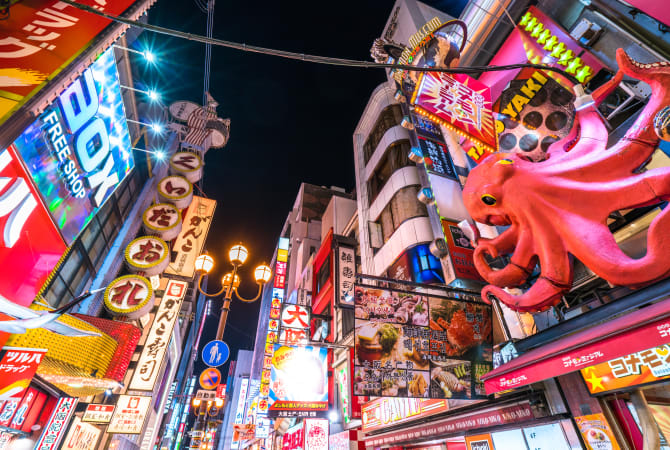
Osaka's Dotonbori, above, is the day 8 alternative to Nara: 15 minutes from Kyoto, and the loudest food street in Japan.
Craft: the shokunin
Shokunin means a craftsperson who gives a lifetime to one thing and keeps refining it. The best preparation is Jiro Dreams of Sushi, the documentary about Jiro Ono's tiny Tokyo sushi counter. It's the shokunin idea on film, and it turns every counter meal on this trip into something to watch as well as eat.
Where to see it on the route:
- Tokyo: Kappabashi. The kitchen-tool street next to Asakusa, where restaurant supply shops sell knives, tools and the plastic food models in restaurant windows.
- Tokyo: the Japan Folk Crafts Museum. Mingeikan, the home of mingei, the movement that valued everyday objects made by anonymous craftspeople.
- Kanazawa: gold leaf. The city makes more than 98% of Japan's gold leaf. At Hakuza you can watch it made and try applying it yourself; book ahead.
- Kanazawa: everything else. Kutani porcelain and Kaga yuzen silk dyeing are both local traditions. Visit Kanazawa's craft pages list studios and shops.
- Kyoto: knives. Aritsugu in Nishiki market is the classic stop for a hand-made kitchen knife.
⚠️ WARNING: a kitchen knife goes in checked luggage, never in hand luggage. Buy knives on day 7 in Kyoto rather than day 1, then pack them in the checked suitcase.
Electronics
Akihabara is the district, and Yodobashi Akiba is the building: multiple floors of cameras, audio, computers and games, next to Akihabara station. Put it on day 2, after the fish market.
Before buying:
- Check the voltage. Japan runs at 100V. Anything labelled 100-240V works at home. A 100V-only appliance, such as a hair dryer, won't suit German 230V sockets.
- Check the warranty. Warranties on Japanese-market products are often valid in Japan only.
- Tax-free changes on 1 November 2026. From then on, you pay the tax in the shop and claim it back at customs when you leave. It needs ¥5,000 per store per day, and a handling fee of about 1.5% to 2% comes off the refund.
What changed for a 2027 trip
| Entry | Visa-free for up to 90 days on a German passport |
| JESTA | Japan's new electronic travel authorisation. Law passed May 2026, must start by 31 March 2029, not live yet |
| Arrival forms | Visit Japan Web pre-fills immigration and customs as a QR code. Free, optional |
| Departure tax | ¥3,000 per person since 1 July 2026, up from ¥1,000, built into the ticket |
| Tax-free shopping | From 1 November 2026: pay the tax in the shop, claim it back at airport customs |
| Kyoto hotel tax | Since 1 March 2026, ¥200 to ¥10,000 per person per night, by room rate |
| Flights from Munich | Lufthansa and ANA fly nonstop to Haneda, about 12 hours 20 minutes |
JESTA could go live inside 2027, so check whether it's needed when booking. The nonstop flights are on Lufthansa and ANA. The departure tax is confirmed on JNTO's site, the tax-free change on the Japan Tourism Agency's, and Kyoto's rates on Kyoto's tourism site. At normal hotel prices, the Kyoto tax adds ¥400 to ¥1,000 per person per night.
The case for skipping the famous five
A thread by Silvina Dell'Isola, a Spanish-language travel writer who covers "places less obvious", argues against every standard itinerary. It's in Spanish; translations are mine.
Her "worst cities to visit" are Tokyo (too many people for everything), Kyoto (temples turned into queues), Osaka (noise, neon and crowds), Nara (deer surrounded by tourists) and Yokohama ("Tokyo without being Tokyo"). Her alternatives: Kanazawa, Takayama, Matsumoto, Kurashiki and Nagasaki. Her closing line: "El error es cruzar medio mundo para visitar exactamente el mismo Japón que todos." The mistake is crossing half the world to see exactly the same Japan as everyone else.

On 10 days she's half right. Skipping Tokyo when you land there isn't practical, and Kyoto at opening time answers most of her complaint. But her first pick, Kanazawa, is the best stop on this route, and the rest of her list belongs to a second trip.
For a longer trip
- Hakone. Hot springs and Mount Fuji views, 1.5 to 2 hours from Tokyo. Climbing Fuji is summer only and costs ¥4,000 per climb, with the Yoshida Trail capped at 4,000 climbers a day by online reservation.
- Nikko and Kamakura. Day trips from Tokyo: forest shrines 2 hours north, the Great Buddha 1 hour south.
- Takayama and Shirakawa-go. Wooden old town and thatched farmhouses, south of Kanazawa.
- Matsumoto. The black castle below the Japanese Alps.
- Hiroshima and Miyajima. The Peace Memorial and the floating torii, about 1 hour 45 minutes west of Kyoto.
- Kurashiki and Nagasaki. Canal-side storehouses near Okayama, and a harbour city shaped by foreign trade.
For me
- Watches. The Seiko Museum Ginza, Grand Seiko boutiques in Ginza, and Nakano Broadway for vintage watches and cameras. Background in Grand Seiko and Seiko.
- Chocolate. Minimal, a Tokyo bean-to-bar maker, for the radar in Chocolate.
Further Reading