

Ploid is a people data provider built for AI agents first and humans second. It claims an index of more than 2 billion people, assembled from every public source a person shows up in, and serves it through a REST API, a CLI and a hosted MCP server. Ask Claude or ChatGPT "find CFOs who scaled SaaS companies" and the agent calls Ploid instead of a human clicking filters in Apollo.
It launched publicly on 28th October 2026. Co-founder and CEO Manny Hernandez announced it on X:
I think the world's data should belong to everyone, so we indexed over 2 billion people globally. Ploid turns the public web into one profile for every person and company on earth, and serves it to you and your agents for cents.
The 70-second launch video by Ploid, from the post below: Manny Hernandez on stage, then the dataset builder, a results table with a "Match" check per criterion, and the Claude connector.

The company
| Founded | 2025, San Francisco |
| Founders | Manny Hernandez (CEO), Kamran Karic (CGO) |
| Team | 2 on the YC profile, 3 on Ploid's own site |
| Investors | Y Combinator (Fall 2026 batch), Founders Inc |
| Index size | "Over 2 billion people" on the site, "3B+" in its own meta tags |
| Logos shown | AngelList, Rippling, OpenAI |
A 2-person company with a 2-billion-person index. That suggests most of the data is crawled and linked by machines, then bought in for contact details. The privacy policy confirms it: contact fields come from third-party vendors such as FullEnrich, and the rest from Ploid's own crawling and identity matching.
What it does
The pitch is the Superprofile: 1 record per person that links professional profiles, social accounts and personal sites, and that an agent can reason over, including posts, photos and talks. Traditional providers sell static rows that were true weeks ago. Ploid says it retrieves live.
| Surface | Endpoint | What you get |
|---|---|---|
| Search | POST /v1/search |
Up to 150 people from 1 natural-language query, ranked against 5 criteria |
| People Sets | POST /v1/sets |
A durable list built in the background, every criterion verified (preview) |
| Resolve | POST /v1/resolve |
1 person from a name plus 1 clue, with a permanent person_id |
| Person | POST /v1/person | Deep research on 1 person, with sources and field-level provenance |
| Contacts | POST /v1/enrich |
Work email, personal email and phone for a known person |
| Fill columns | POST /v1/datasets |
Your own rows enriched with typed columns, each with a confidence score |
| Profiles | POST /v1/socials |
Full public profiles from LinkedIn, Instagram, GitHub, Reddit and others |
| Monitors | POST /v1/monitors |
Alerts on job changes, profile updates, new posts, new matches |
| Technographics | POST /v1/technographics |
The tech stack a company domain shows, with evidence (Scale plan, beta) |
| GitHub search | POST /v1/github/search |
GitHub accounts by company, repository or login (beta) |
The results table in the video is the interesting part: each row shows a Match per criterion, so you see why a person made the list instead of trusting a filter.
How to use it with an agent
MCP is the main door. Add https://api.ploid.com/mcp as a custom connector in Claude (Customize, Connectors) or in Claude Code. It signs in with OAuth 2.1, so no API key is copied anywhere. The first MCP connection without a workspace creates a free 30-day trial, no card.
The MCP server has 5 tools:
| Tool | Input | Cost |
|---|---|---|
research_person |
LinkedIn URL, or name plus company domain | 25 credits, then free rereads for 90 days |
find_people |
A plain-English query, up to 25 people | 1 credit per 10 people |
find_decision_makers |
Company, the product you sell, optional titles | 1 credit per 10 people, up to 20 people |
get_research_status |
The run_id of a running job |
Free |
cancel_research |
The run_id |
Free, work already done stays billed |
Research runs in the background and can take minutes. The tool returns a run_id at once, and the agent polls every 5 seconds or more. A person Ploid can't identify with confidence comes back as found: false with suggested clues, and costs nothing. That's the right design: no same-name biography of the wrong person.
The CLI needs Node.js 20 or newer:
curl https://ploid.com/install -fsS | bash
ploid login
ploid --json search "AI security founders in San Francisco" --limit 10
The REST API lives at https://api.ploid.com/v1, with an OpenAPI 3.1 spec and Bearer-key auth. Rate limits run from 10 requests a minute on the free tier to 1,000 on Scale. /v1/socials and /v1/linkedin/* cap at 60 a minute and 600 an hour.
Pricing
| Growth | Scale | Custom | |
|---|---|---|---|
| Per month | $200 | $600 | Negotiated |
| Credits included | 1,000 | 4,000 | Negotiated |
| Per extra credit | $0.20 | $0.15 | Custom |
| Technographics | No | Yes | By deal |
| SSO, audit logs | No | No | By deal |
- Credits are per workspace, shared across the app, API, MCP and CLI, and they don't roll over.
- Only hits are billed. A contact field that comes back
not_foundcosts nothing. - "For cents" depends on the call. A list is cheap: 1 credit per 10 people is 2 cents a person on Growth. A deep
research_personis 25 credits, so $5 on Growth and $3.75 on Scale. A phone number is 10 credits, so $2 on Growth.
Fields returned and what they cost
1 credit is 1 ACU, Ploid's usage unit. The docs quote a "face value" of $0.10 per ACU (25 ACU = $2.50), but no plan sells at that rate: the real price is $0.20 on Growth and $0.15 on Scale. The dollar columns below use those 2 rates.
Credits per call
| Call | Endpoint | Credits | Growth | Scale | Free when |
|---|---|---|---|---|---|
| Name lookup | POST /v1/search/candidates |
1 per search, up to 10 profiles | $0.20 | $0.15 | The search fails (0 matches billed) |
| Resolve 1 person | POST /v1/resolve |
2 when found | $0.40 | $0.30 | No match |
| Email to person | POST /v1/reverse |
1 when found | $0.20 | $0.15 | No match |
| People list | POST /v1/sets, MCP find_* |
1 per 10 people admitted, rounded up | $0.02 a person | $0.015 a person | People left "in review" |
| Person research | POST /v1/person |
25 for the first profile | $5.00 | $3.75 | Rereads for 90 days, not found |
| Technographics | POST /v1/technographics |
1 per domain with a technology found | Scale only | $0.15 | Nothing found, blocked, failed |
| GitHub search | POST /v1/github/search |
1 per search, plus 1 per live profile | $0.20 and up | $0.15 and up | The search fails |
| Monitor setup | POST /v1/monitors |
1 to compile, 1 to create | $0.40 | $0.30 | Webhook tests |
| Monitor run | Scheduled | 1 per target fetched, plus 1 per new item | Varies | Varies | Baseline run emits nothing |
Ploid doesn't publish the price of 4 calls: the instant POST /v1/search, POST /v1/enrich per contact field, POST /v1/socials per platform, and the /v1/linkedin/* reads. The response tells you after the fact, in meta.credits_charged or meta.usage.
Fill columns, per found cell
POST /v1/datasets is the only place with a published price per field, and it bills only found cells:
| Column | Credits per found cell | Growth | Scale |
|---|---|---|---|
| Built-in standard column (title, headcount, socials) | 1 per 10, rounded up | $0.02 a cell | $0.015 a cell |
custom.* question |
1 | $0.20 | $0.15 |
email.work |
1 | $0.20 | $0.15 |
email.personal |
3 | $0.60 | $0.45 |
phone |
10 | $2.00 | $1.50 |
not_found, unverified, timeout |
Free | $0 | $0 |
What each call returns
Search and People Sets, per person:
person_id, which/v1/personand/v1/enrichacceptname,title,company,location,linkedin_url,profile_url,socialsconfidenceandscore: the rank in this response, not a probabilityfilter_match: 1 entry per filter, with the value it matched- 1 verification entry per criterion, with the evidence, on
autoanddeepsearches identity_verified: false, until/v1/personconfirms the personcontact_status: "requires_enrichment": no emails or phones, those cost extra
Person research (/v1/person), per person:
| Section | Fields |
|---|---|
identity |
Name, LinkedIn URL, headline, company, location, confidence |
summary |
The reviewed research report, with time labels and limitations |
source_links |
Up to 25 public evidence links, each found or not verified |
professional |
Current role (only if dated in the last 90 days), history, education, skills |
presence.platforms |
Each account: handle, URL, bio, avatar, followers, following, posts, likes, last active, topics |
signals |
Interests with strength and source URL, affinities, activity cadence |
age_range |
Always null for now: Ploid doesn't infer age |
provenance |
Per field: source, source URL, first seen, last seen, confidence |
Every history, education, platform and interest entry carries a timeframe (dated, undated, historical) and an evidence_statement.
Contacts (/v1/enrich): request any of work_email, personal_email, phone and linkedin_url. Each comes back with value, status (found, not_found or unavailable), confidence, source (for example fullenrich) and last_seen. Mailing addresses are "coming soon".
Fill columns (/v1/datasets), with the built-in columns:
| Entity | Built-in columns |
|---|---|
| Company | name, domain, description, founded_year, headquarters, headcount, industry, linkedin_url, page_text, socials.* |
| Person | name, title, company, location, email.work, email.personal, phone, website, socials.* |
| Custom | name, plus any custom. |
socials.* covers LinkedIn, X, Instagram, YouTube, TikTok and GitHub. page_text returns the company site's text, up to 20,000 characters. Every cell has a value, a 0 to 1 confidence, up to 3 evidence pages with a quote and a read date, and, for emails and phones, a deliverability check: valid, risky or unknown.
A custom.* column on a person runs the reviewed research: Ploid's own example asks for hobbies, favourite sports team and hometown.
LinkedIn profile (/v1/linkedin/profile): the whole public profile. Name, headline, summary, location, industry, follower and connection counts, photos, every position, education, skills with endorsements, languages, certifications, awards, projects, recommendations, volunteering, publications, courses, patents, and the open-to-work and Premium flags. The same family reads posts, comments, company pages and LinkedIn people search.
Social profiles (/v1/socials): 1 public profile from LinkedIn, X, Instagram, TikTok, YouTube, GitHub, Reddit or Facebook. The docs don't list the profile fields.
What it costs in practice
Map 25 people at 1 account, with a work email and a mobile for each, and assume every cell is found:
| Item | Credits | Growth | Scale |
|---|---|---|---|
| The list of 25 people | 3 | $0.60 | $0.45 |
| 25 work emails | 25 | $5.00 | $3.75 |
| 25 phone numbers | 250 | $50.00 | $37.50 |
| Total | 278 | $55.60 | $41.70 |
Phones are 90% of the bill. So:
- Ask for phones only for the people you'll call. Growth's 1,000 monthly credits buy 100 phones, or 1,000 work emails.
- Resolve before you research. A name lookup (1 credit) or
resolve(2) confirms the right person before a 25-credit profile. - Cap the spend. Set daily and monthly budgets per API key, a
budget.creditscap per People Set, and anIdempotency-Keyon every POST, so a retry never bills twice.
The GDPR question
This is the part to read before using it from Germany.
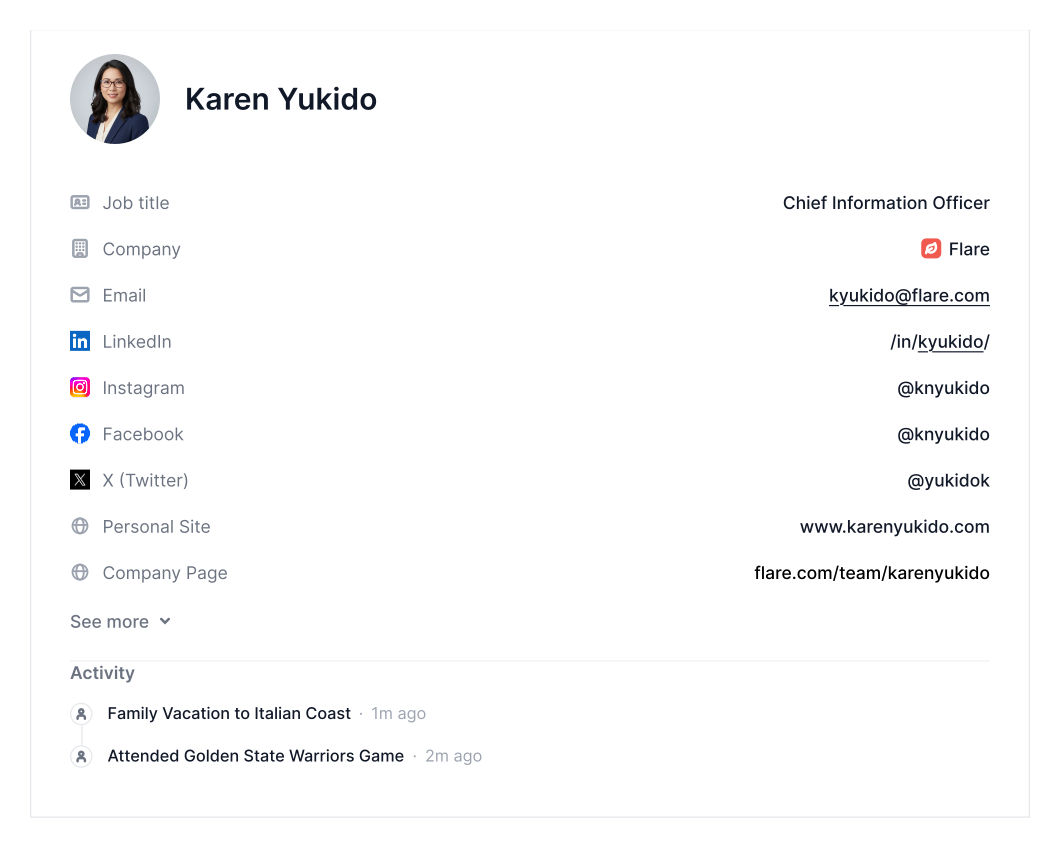
- The index holds personal data, not only work data. The demo Superprofile on Ploid's own home page links Instagram, Facebook and a personal site, and shows "Family Vacation to Italian Coast" in the activity feed. The privacy policy says Ploid focuses on professional data. The marketing shows more.
- Nobody in the index was asked. Ploid relies on GDPR Article 14's "disproportionate effort" exception: it publishes its policy instead of telling each of the 2 billion people that it holds a profile on them.
- Opting out is by email. Access, correction and deletion requests go to 1 co-founder's mailbox. There is no self-serve form yet.
- The risk sits with the customer. The terms say you alone are responsible for lawful use, including anti-spam and privacy law. In Germany, a cold email to a contact found here still needs consent or a defensible legitimate interest, whatever the tool.
Against what I already use
| Need | My current stack | Ploid |
|---|---|---|
| Find people at an account | Apollo, my LinkedIn database | find_decision_makers from inside Claude Code |
| Emails and mobiles | FullEnrich waterfall | /v1/enrich, with FullEnrich among its own sources |
| Research 1 person before a call | prep-call with web search |
research_person, with sources, $3.75 to $5 a run |
Ploid isn't a new data source for contact details: part of what it returns is FullEnrich, which I already use through lookup.py. What's new is the shape. A list of decision makers, verified criterion by criterion, from 1 sentence in an agent, without exporting a CSV.
Verdict
Worth the free 30-day trial through MCP. The test: map the buying committee of 1 real account with find_decision_makers, and compare the list with Apollo and my own LinkedIn connections. Keep research_person for the calls that matter, at $5 a run.
What would stop me: a 2-person company holding personal profiles of 2 billion people under a US-first privacy model. For EU prospecting, use it to find and qualify people, and keep the outreach on a lawful basis I can defend myself.
Related: see Data providers for B2B sales lead generation, see Apollo and see Clay.
Further Reading

- Pricing, Ploid
- API documentation, Ploid
- Privacy policy and data rights and requests, Ploid
- Our vision, Ploid's company page