

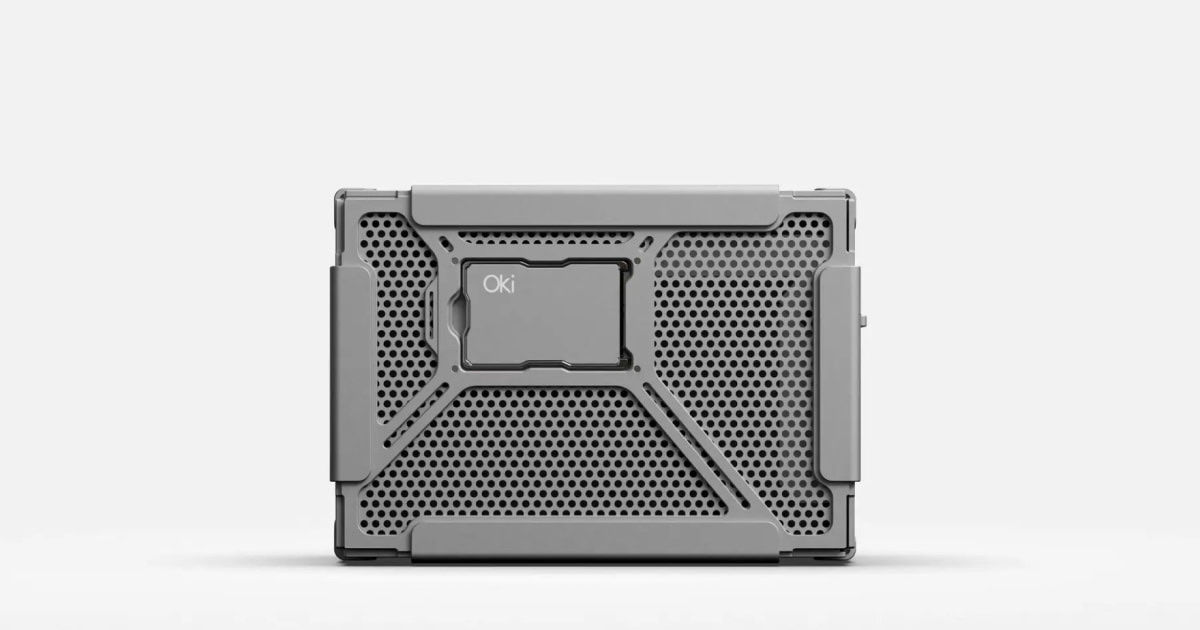
Oki Home is a home computer built to hold your whole digital life and an AI that works on it. Photos, documents, messages, trips and plans flow in from the apps you connect, land on 1 timeline, and stay on a box you own. A local model runs on its own GPU around the clock to organise all of it, answer questions about it, and carry out tasks.
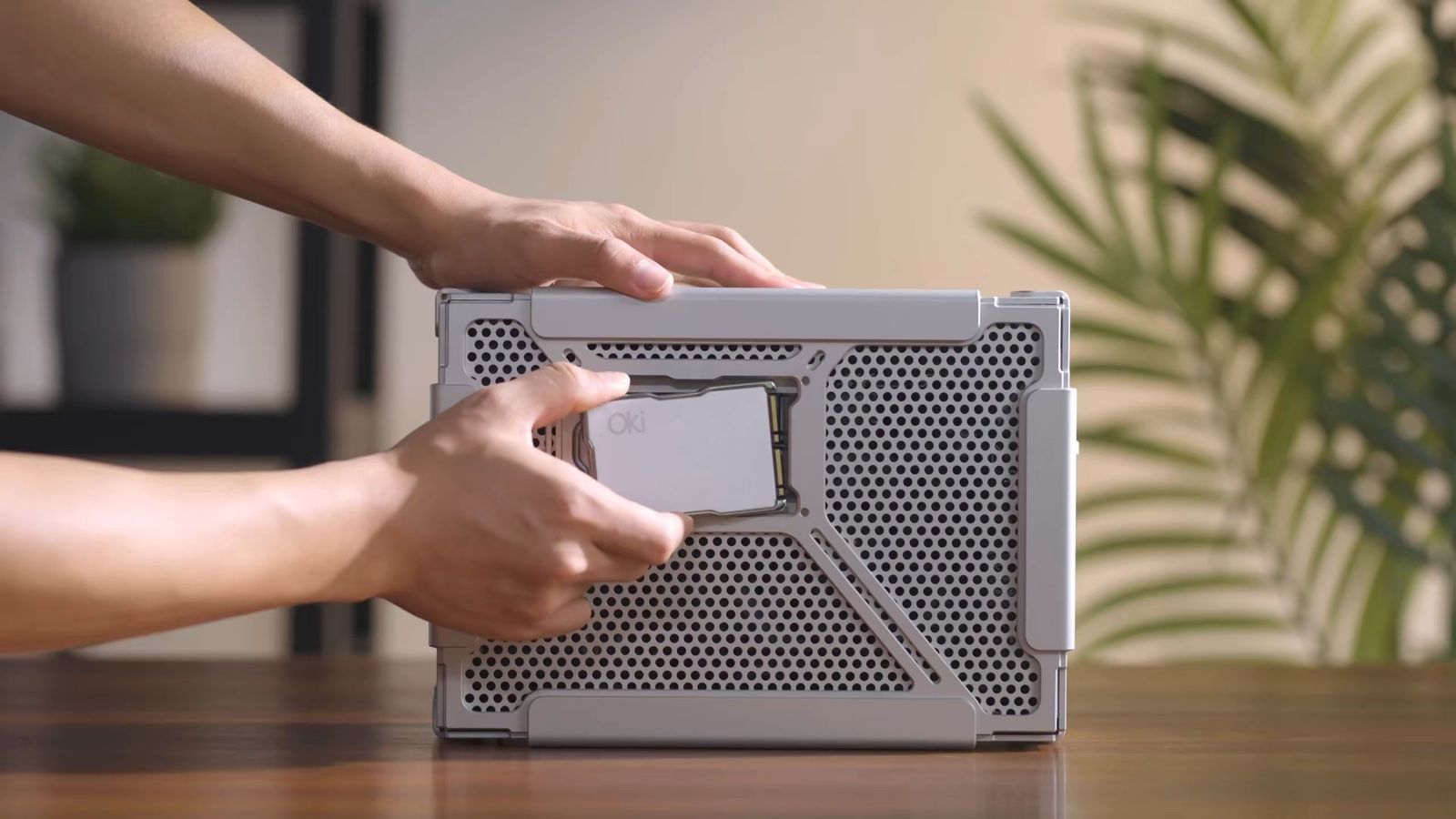
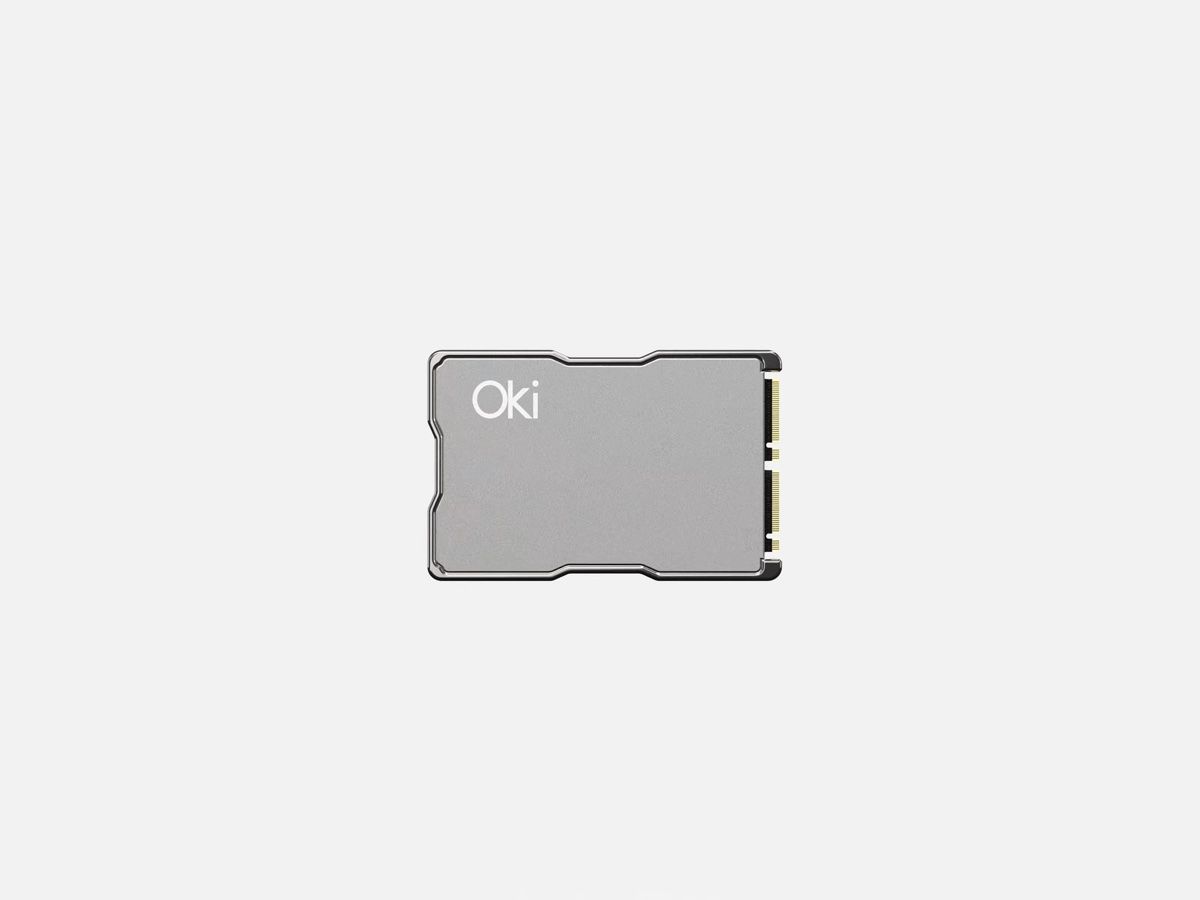
Oki calls it a memory computer. The storage is the selling point as much as the AI: data lives on a Memchip, a credit-card-sized drive you can pull out and hold in your hand.
| Maker | Oki Applications Inc., San Francisco, Y Combinator Winter 2025 |
| Price | $1,799 for the launch batch, then $2,299. 2 TB Memchip included |
| Reservation | $59, refundable at any time, credited to the purchase |
| Ships | Mid-December 2026, United States first |
| Model | A 27B-parameter model, running locally 24/7 |
| Apps | Mac, iOS and the web |
| Subscription | None |
The launch film
Video: Oki, from the Oki Home site.
What it does
Oki sorts the product into 3 jobs:
- Memory: store everything. Every photo, message and file lines up on 1 timeline, organised automatically and kept up to date from the devices and apps you connect.
- Intelligence: find anything. Ask in your own words. Oki finds moments, documents and details by who, where or when, even when you've forgotten the name. In the background it prepares summaries and answers before you ask.
- Action: Oki Desk. A workspace where the agent browses websites, compares options and works through multi-step tasks using your notes, files and conversations. You follow along, check the details and steer the next step.
Around that:
- Remote access from your signed-in phone or laptop. The files stay at home.
- Updates with consent. New features and model upgrades arrive over the air, and every update waits for your approval.
- Make it yours: workflows, custom instructions, plug-ins and functions, plus a full Linux environment.
For business people
The idea: your digital self is spread across iCloud, Google, WhatsApp, Dropbox and a dozen apps. Oki wants 1 place that holds all of it, at home, with an AI that has read everything. It's half NAS, half personal assistant.
Value: $1,799 at launch buys the box, 2 TB of storage and the AI, with no monthly fee. Larger Memchips cost extra, up to 16 TB.
The company: founder and CEO Luofei Chen studied engineering and business at UC Berkeley and built high-end PCs before this. Oki started in Y Combinator's Winter 2025 batch with a different product, Oki AI, which turned a company's code, tickets and messages into daily briefings for leaders. Oki Home takes the same idea, context turned into useful updates, from the company to the person. It's a team of 6, backed by Y Combinator and MiraclePlus.
The limits:
- Reservations only. Nothing ships before mid-December 2026, and then only in the US. Outside the US, Oki asks you to talk to the founder first.
- Not fully local. Remote access, connected services and the optional cloud models send data out when you use them. Local AI is the base, not the whole product.
- A small model on a small GPU. 16 GB of GPU memory is tight for a 27B model (see the technical section).
- Version 1 from a 6-person team. No reviews exist yet. The software decides whether this is useful, and nobody outside Oki has used it.
Compared with Ghost Core
Ghost launched a similar box in the same week (see Ghost Core ). The pitches overlap, the priorities differ:
| Oki Home | Ghost Core | |
|---|---|---|
| Price | $1,799 launch, $2,299 later | $3,499 |
| Focus | Memory: your files and photos, organised | Agent: proactive help from your apps and devices |
| GPU | RTX 5060 Ti, 16 GB | RTX PRO 4000 Blackwell, 24 GB |
| System RAM | 32 GB | 64 GB |
| Storage | 2 to 16 TB on a swappable Memchip | 1 TB |
| Ships | Mid-December 2026, US | 31st October 2026 |
| For developers | Full Linux environment | OpenAI-compatible endpoint |
Oki is the cheaper, storage-first option. Ghost has the stronger GPU and more room for models.
For technical people
| Part | Spec |
|---|---|
| GPU | NVIDIA GeForce RTX 5060 Ti, 16 GB GDDR7 |
| RAM | 32 GB |
| Storage | M.2 NVMe on the Memchip, 2 TB included, up to 16 TB |
| Network | 10 Gb Ethernet, Wi-Fi 7 antenna connectors |
| Ports | 3× DisplayPort, 2× HDMI, 2× USB-C and 3× USB-A at 10 Gb/s, 2× USB-A 2.0, 3× 3.5 mm audio, optical S/PDIF |
| Case | Bead-blasted aluminium, satin finish, 350 × 220 × 320 mm |
- The Memchip is an M.2 NVMe drive in an 86 × 54 × 6 mm shell, the size of a credit card, with a polished titanium rim and an aluminium heatsink. Swap it, and your data goes with it.
- The model: Oki says 27B parameters but doesn't name it. In 16 GB of GPU memory, a 27B model fits only at about 4 bits per weight, which leaves little room for long context.
- The 10 Gb Ethernet and the ports make it a capable home server, not only an AI appliance.
- Linux environment: run your own models and apps on the hardware, or use it for something else entirely.
Value
The memory angle is the interesting part. Most local-AI boxes sell the agent. Oki sells the archive first, and the AI comes with it: an AI that has read your photos, mail and files is only as good as the data it can reach, and Oki starts there.
For me, it's a reference point rather than a purchase. My data already lives on the UNAS Pro and in SQLite, and NicAI runs a fine-tuned Qwen on the Mac Studio with more memory than this GPU has. What I'd borrow is the timeline: 1 view of everything by date, person and place.
Further Reading